Blogs
We share with you the latest industry trends, try to solve all your questions about flexible packaging machines and printing machines as well. Read our blogs to keep abreast of what’s new in the industry and in Zonbon.

Choosing a cigarette tear tape slitting machine is not simply a matter of finding equipment with a sufficiently small minimum slit width. Tobacco packaging tear tape is typically converted into narrow finished rolls, so the complete process must maintain slit-width consistency, clean edges, stable web handling, and controlled rewinding across the required production range.
For tobacco packaging converters, tear tape manufacturers, packaging material suppliers, and machinery buyers, the better starting point is the finished product. Define the tear tape material, thickness, parent roll, required slit width, number of slit lanes, finished core, rewind diameter, and downstream application before comparing machine specifications.
A machine may be mechanically capable of producing a narrow strip but still be unsuitable if the tape moves during cutting, individual lanes wind differently, finished rolls telescope, or the required width cannot be maintained at a practical production speed.
This guide explains how buyers can evaluate a tear tape slitter from the actual converting requirement backward, rather than selecting equipment from maximum speed and minimum slit-width figures alone.
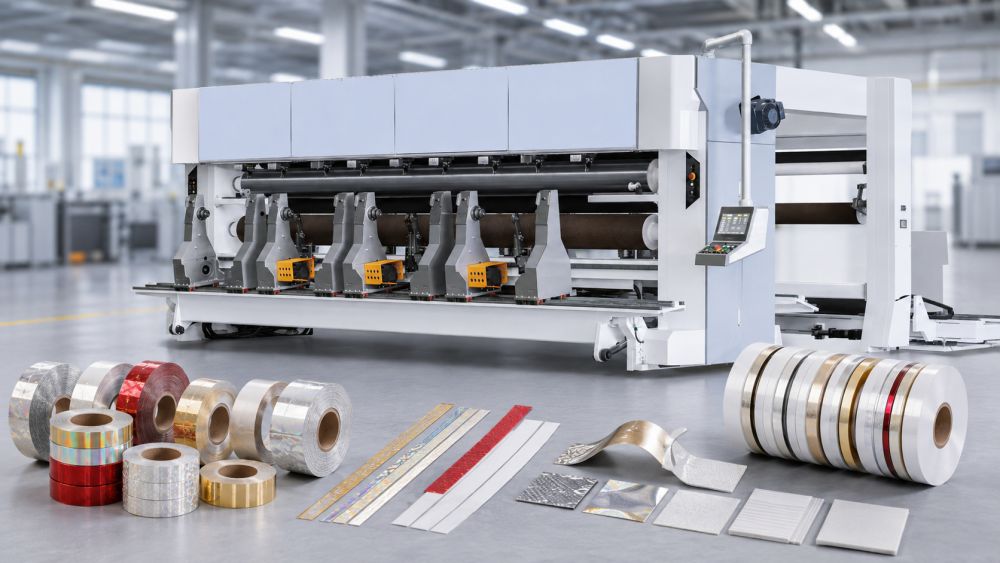
Cigarette tear tape is a narrow opening strip used with tobacco packaging to help the consumer open an overwrapped package. Depending on the packaging structure and supplier, tear tape products can differ in base material, thickness, coating, surface characteristics, dimensions, and finished-roll requirements.
From a converting perspective, the important point is that a wider parent web may need to be divided into multiple narrow strips and rewound into consistent finished rolls for subsequent packaging operations.
The main challenge in cigarette tear tape slitting is not simply separating a wide web. The machine must repeatedly produce narrow strips while controlling their position and winding behavior from the parent roll through to the finished rolls.
As slit width becomes narrower and more lanes are produced from one parent web, small variations in web position, knife setting, material thickness, or rewinding conditions can become more important to the finished product.
| Production Requirement | Why It Matters |
|---|---|
| Narrow Finished Width | The machine must maintain the required width consistently rather than only demonstrate that a narrow strip can be cut. |
| Multiple Slit Lanes | Knife positioning and web stability must remain consistent across multiple cutting positions. |
| Clean Slit Edges | Damaged or inconsistent edges can affect finished roll quality and downstream use. |
| Stable Web Position | Lateral web movement can influence slit position and finished-width consistency. |
| Controlled Rewinding | Multiple narrow rolls must be wound without unacceptable looseness, excessive tightness, or telescoping. |
| Repeatable Production | The required result should remain stable through normal acceleration, running, deceleration, and roll changes. |
This is why buyers should evaluate the entire converting path:
Parent Roll → Web Control → Cutting → Multiple Narrow Strips → Rewinding → Finished Tear Tape Rolls
A weakness at any stage can affect the final rolls even when the knife itself is capable of cutting the required material.
A successful machine test should be judged from the finished rolls, not only from whether the web passes through the machine. Buyers should check whether the produced rolls meet the requirements of their downstream packaging process or customer specification.
Consistent finished width
Clean and acceptable slit edges
Aligned roll edges
Stable winding without obvious telescoping
Suitable and consistent roll hardness
No unnecessary stretching or deformation
Reliable unwinding in the downstream process
Before discussing machine models or optional functions, buyers should define both the incoming material and the required finished roll. The term "cigarette tear tape" alone does not provide enough information to determine the correct slitting configuration.
Two tear tape products can have similar finished widths but behave differently during cutting and rewinding because their material structure, thickness, coating, surface characteristics, or parent-roll dimensions are different.
| Information to Define | What the Buyer Should Provide | Why It Affects Machine Selection |
|---|---|---|
| Material | Actual tear tape material and structure | Influences cutting behavior and web handling |
| Thickness | Minimum, maximum, and regular production thickness | Affects cutting and tension requirements |
| Surface / Coating | Any coating, printing, metallization, or sensitive surface | May affect roller contact, cutting, and contamination concerns |
| Parent Roll Width | Actual incoming web width | Determines required machine working width and potential slit layout |
| Parent Roll Diameter | Maximum regular incoming roll diameter | Affects unwind configuration and roll handling |
| Parent Core | Core inside diameter and any regularly used alternatives | Determines unwind shaft or holding compatibility |
| Finished Slit Width | Regular widths and narrowest required product | Influences knife arrangement and narrow-width capability |
| Number of Lanes | How many narrow strips are required from the parent web | Affects knife layout and rewinding requirements |
| Finished Core | Required rewind core size | Determines rewind compatibility |
| Finished Roll Diameter | Required maximum or typical rewind diameter | Affects winding structure and production cycle |
Providing these specifications before requesting a quotation allows the supplier to evaluate the actual production task instead of recommending a standard tear tape slitting machine configuration from the product name alone.
Minimum slit width is an important specification for cigarette tear tape production, but it should not be evaluated in isolation. A catalog may state that a machine can reach a particular narrow width, yet that number alone does not confirm stable commercial production.
The more useful question is:
Can the machine maintain my required tear tape width, edge quality, and rewind stability across multiple lanes at a practical production speed?
Buyers should therefore separate minimum achievable width from repeatable production capability.
| Don't Check Only... | Also Confirm... |
|---|---|
| Minimum slit width | Whether the required width can be maintained consistently |
| One narrow sample strip | Performance across the required number of slit lanes |
| Knife positioning | Web stability and cutting consistency during production |
| Maximum machine speed | Stable speed with the actual tear tape material and slit pattern |
| Finished roll diameter | Roll hardness, edge alignment, and winding stability as diameter increases |
| Short demonstration | Repeatable performance during realistic production conditions |
Producing one narrow strip and producing many narrow strips simultaneously are different converting conditions. As the number of lanes increases, buyers should pay closer attention to knife positioning, web stability, individual roll behavior, and whether the rewinding system can maintain acceptable consistency across the finished rolls.
For this reason, the RFQ should include not only the narrowest tear tape width but also the parent roll width, intended slit pattern, number of finished lanes, and rewind specifications.
When comparing suppliers, buyers can provide a representative production specification and ask each manufacturer to confirm the expected result under those conditions. This makes quotations easier to compare because the discussion moves from an isolated minimum-width number to an actual tear tape production requirement.
The cutting system for cigarette tear tape should be selected according to the actual tape material, thickness, required slit width, number of lanes, edge-quality requirement, and intended production speed. Buyers should not assume that one knife type is automatically suitable for every tear tape product.
For thin flexible tear tape materials, razor or shear cutting may be evaluated depending on the material structure and machine design. The final decision should be based on whether the proposed system can produce consistent narrow widths and acceptable slit edges without unnecessary material damage.
| Cutting Factor | What Buyers Should Confirm |
|---|---|
| Material Structure | Whether the proposed knife system has been matched to the actual tear tape material rather than a general "film" description |
| Material Thickness | Whether cutting remains stable across the complete production thickness range |
| Required Slit Width | Whether the knife arrangement can repeatedly produce the required narrow strips |
| Number of Lanes | Whether knife positioning remains practical when multiple narrow strips are produced simultaneously |
| Edge Quality | Whether the finished edge meets downstream tobacco packaging requirements |
| Knife Wear | How blade condition affects narrow-width cutting and how knives are inspected or replaced |
| Changeover | How knife positions are adjusted when different tear tape widths or slit patterns are produced |
Razor cutting can be considered for suitable thin flexible materials because of its direct cutting action and relatively simple knife arrangement. Shear cutting may be evaluated when the material or finished-edge requirement benefits from a controlled upper-and-lower knife cutting action.
The important point is not to select razor or shear from the product name alone. A supplier should evaluate the actual tape sample and production specification, particularly when the material is coated, printed, metallized, laminated, unusually thin, or required in very narrow finished widths.
A knife can successfully separate the parent web and still produce an unacceptable finished product. During testing, buyers should inspect the narrow tape for rough edges, deformation, particles, coating damage, inconsistent cutting, or other defects that could affect downstream use.
Narrow tear tape production depends on keeping the web stable before, during, and after cutting. Even accurately positioned knives cannot maintain consistent results if the parent web moves laterally, stretches excessively, wrinkles, or experiences unstable tension.
For this reason, buyers should evaluate web guiding and tension control as part of the cutting process rather than as separate optional machine functions.
A web guiding system detects and corrects lateral movement of the incoming material so the web enters the cutting section in a controlled position. This becomes particularly important when the usable web area, slit layout, or finished-width requirement leaves little tolerance for sideways movement.
When evaluating guiding performance, buyers should confirm:
Where the guiding sensor is positioned
Whether the system follows the required web edge or reference
How quickly the system responds to lateral movement
Whether correction remains smooth at the intended production speed
Whether the actual tear tape material can be detected reliably
Tension that is too high can stretch or deform sensitive material, while tension that is too low can allow the web to wander, wrinkle, or become unstable around the cutting section. The appropriate tension range therefore depends on the actual tear tape construction and production conditions.
| Observed Condition | Possible Area to Check |
|---|---|
| Material stretches during production | Excessive tension or unsuitable tension settings |
| Web moves around the cutting section | Guiding, tension stability, web path, or material behavior |
| Wrinkles appear before cutting | Tension distribution, roller alignment, web path, or parent-roll condition |
| Slit position changes during running | Web guiding, knife positioning, web stability, or mechanical alignment |
| Material behaves differently as the parent roll becomes smaller | Tension control response as unwind diameter changes |
A short demonstration at one constant speed does not show the complete tension-control performance. Buyers should also observe the material during acceleration, stable running, deceleration, and stopping because these transitions can expose tension fluctuations that are less visible at constant speed.
The objective is not simply to keep the web tight. It is to maintain controlled tension appropriate for the material throughout the production cycle.
For cigarette tear tape production, successful cutting does not automatically mean successful converting. After the parent web has been divided into multiple narrow strips, each strip must still be rewound into a usable finished roll.
This can become more demanding as the number of narrow rolls increases. Small variations in material thickness, slit position, winding tension, core position, or roll diameter can create differences between individual finished rolls.
Buyers should therefore evaluate the rewinding system according to the complete slit pattern and number of finished rolls, not only the maximum rewind diameter.
Whether roll edges remain aligned
Whether the finished rolls have consistent winding behavior
Whether any rolls become noticeably looser or tighter than others
Whether telescoping develops as roll diameter increases
Whether the tape is stretched during rewinding
Whether the required finished diameter can be reached reliably
Whether the rolls unwind smoothly in the next packaging process
A parent web may contain small thickness variations across its width. When many narrow strips are rewound simultaneously, those small differences can accumulate as the finished roll diameters increase. Differences in web path, core position, material behavior, and winding conditions can also affect individual rolls.
The result may be that one roll becomes tighter while another remains relatively loose, even though both originated from the same parent web.
Differential rewinding may be worth evaluating when multiple narrow rolls are produced simultaneously and individual rolls need some ability to compensate for small differences in thickness, diameter, or winding behavior. Whether it is necessary depends on the material, slit width, number of rolls, rewind structure, and required finished-roll quality.
Buyers should not assume that differential rewinding is mandatory for every tear tape application. Instead, ask the supplier to explain how the proposed rewind system manages multiple narrow rolls and why that configuration fits the actual slit pattern.
| Rewinding Requirement | Machine Area to Evaluate |
|---|---|
| Many narrow finished rolls | Rewind shaft and roll arrangement |
| Consistent roll hardness | Rewind tension and individual roll behavior |
| Reduced telescoping risk | Alignment, tension, core position and winding control |
| Different finished widths | Knife and rewind positioning flexibility |
| Increasing finished diameter | How winding conditions change as rolls build |
| Frequent product changes | Core setup, shaft handling and changeover procedure |
A tear tape slitting machine should be configured around the complete roll conversion requirement: what enters the machine and what must leave it. Parent-roll and finished-roll dimensions affect unwind structure, shaft selection, machine working width, rewind arrangement, handling, and production cycle time.
Before requesting a quotation, buyers should define the following roll specifications as accurately as possible.
| Roll Parameter | Buyer Should Provide | Machine Decision Affected |
|---|---|---|
| Parent Roll Width | Minimum, maximum, and regular web widths | Machine working width and slit layout |
| Parent Roll Diameter | Maximum regular incoming diameter | Unwind capacity and roll handling |
| Parent Roll Weight | Maximum expected roll weight | Unwind structure and loading requirements |
| Parent Core | Core inside diameter | Unwind shaft, chuck, or adapter selection |
| Finished Slit Width | Regular widths and narrowest required width | Knife spacing and rewind arrangement |
| Number of Finished Rolls | Typical and maximum lanes per parent roll | Knife layout and rewinding configuration |
| Finished Core | Required core size or sizes | Rewind shaft and core compatibility |
| Finished Roll Diameter | Typical and maximum required diameter | Rewind capacity and winding cycle |
Buyers should also define how the parent roll will be divided into finished products. For example, the supplier needs to understand whether the machine will repeatedly produce one standard narrow width, several different widths, or frequently changing slit patterns.
A practical specification should show:
Parent Web Width → Edge Trim if Required → Number of Slit Lanes → Individual Tear Tape Widths → Finished Roll Arrangement
This information helps the supplier evaluate whether the knife spacing, usable web width, trim arrangement, and rewinding structure match the intended production.
Parent-roll dimensions also affect how operators load material, while finished-roll dimensions influence unloading and changeover. If parent rolls are heavy or production requires frequent roll changes, buyers should evaluate the practical handling process rather than considering only the nominal unwind and rewind capacities.
Maximum machine speed is easy to compare on a quotation, but it does not tell buyers how fast a cigarette tear tape slitting machine can run while consistently producing acceptable narrow rolls. For tear tape production, stable production speed is more important than maximum mechanical speed.
As operating speed increases, the complete process must remain coordinated. Web guiding must keep the material in position, tension must remain appropriate for the tape, the cutting system must maintain consistent slit edges, and the rewind section must control multiple narrow rolls as their diameters increase.
The better question to ask a supplier is:
At what speed can this machine consistently maintain my required slit width, edge quality, web stability, and finished-roll quality using my actual tear tape material and slit pattern?
| Speed Term | What It Tells the Buyer | What It Does Not Confirm |
|---|---|---|
| Maximum Machine Speed | The upper mechanical speed stated for the equipment | That every tear tape material and slit pattern can run at this speed |
| Demonstration Speed | The speed achieved during a particular machine test | That the same result will be achieved with a different material or roll specification |
| Stable Production Speed | The practical speed at which the required product quality can be maintained | It still depends on the agreed material and production conditions |
Practical speed can be influenced by several parts of the converting process rather than one machine specification.
Material thickness and dimensional stability
Required tear tape width
Number of simultaneous slit lanes
Knife condition and cutting stability
Web guiding response
Unwind and web tension stability
Rewind tension and narrow-roll behavior
Parent and finished roll dimensions
Required finished edge quality
A useful production test should include acceleration, stable running, deceleration, and stopping rather than only a short period at one constant speed. Narrow-width converting problems can become more visible during speed transitions when web tension and winding conditions change.
If a supplier demonstrates the machine with representative material, buyers should observe whether the slit position, edge quality, and finished rolls remain acceptable throughout these operating stages.
Production efficiency should also account for roll loading, threading, knife adjustment, setup waste, acceleration, finished-roll unloading, and product changeover. A machine with a higher published speed may not necessarily produce more acceptable finished rolls per shift if frequent adjustment or unstable rewinding creates additional downtime.
For converters producing several tear tape specifications, it can therefore be more useful to compare stable output and changeover efficiency than maximum speed alone.
Production problems in cigarette tear tape slitting are rarely caused by one component alone. Width variation, tape breaks, telescoping, loose rolls, damaged edges, and uneven rewinding can result from interactions between the material, knives, web path, guiding, tension, and rewind system.
When a problem appears, operators should avoid changing several parameters at the same time. A more useful approach is to identify where the defect first appears and then check the related process variables systematically.
| Observed Problem | Areas to Check First |
|---|---|
| Inconsistent Tear Tape Width | Knife positioning, web guiding, web movement, material stability and mechanical alignment |
| Tape Breaks | Tension, knife condition, damaged edges, material defects, web path and speed changes |
| Telescoping Rolls | Rewind tension, alignment, core position, web path and winding conditions |
| Loose Finished Rolls | Rewind tension, winding control and material behavior |
| Overly Tight Rolls | Excessive rewind tension and tension profile as roll diameter increases |
| Rough or Damaged Edges | Knife type, blade wear, knife setup, material structure and operating conditions |
| Uneven Rolls Across Rewind Positions | Material thickness variation, rewind structure, core positioning and individual roll behavior |
Inconsistent finished width can result from more than incorrect knife spacing. If the parent web moves laterally while the knives remain fixed, the relationship between the material and cutting positions changes. Web instability, guiding performance, knife movement, mechanical alignment, and material behavior should therefore be checked together.
Buyers evaluating a new machine should ask for the required width to be measured across representative finished rolls rather than judging narrow-width capability visually.
Tape breaks can result from excessive or unstable tension, material defects, damaged slit edges, unsuitable knife conditions, abrupt speed changes, or an unfavorable web path. If breakage repeatedly occurs at a similar location, inspect the material and machine contact points before simply reducing production speed.
For sensitive materials, observe whether breaks occur during constant running or primarily during acceleration and deceleration. This distinction can help identify whether tension transitions contribute to the problem.
Telescoping occurs when layers of the wound roll shift laterally so the roll no longer maintains a stable, flat side profile. Possible contributors include unsuitable winding tension, web misalignment, incorrect core positioning, unstable material feeding, or winding conditions that change as roll diameter increases.
Reducing telescoping therefore requires more than simply tightening the finished roll. Excessive tension can create other problems, especially with thin or stretch-sensitive materials.
Finished-roll hardness is closely related to winding conditions. If rewind tension is insufficient, rolls may become loose and unstable. If it is excessive, the material may be stretched, compressed, or wound too tightly for the downstream process.
The appropriate winding condition may also change as finished-roll diameter increases. Buyers should therefore evaluate the complete roll build rather than checking only the first layers wound onto the core.
Rough edges can indicate an unsuitable or worn blade, incorrect knife setup, material incompatibility, unstable web movement, or operating conditions that exceed what the cutting system can maintain reliably.
For coated, printed, metallized, or other sensitive tear tape constructions, buyers should also check whether the cutting process damages the surface near the edge or generates particles that could affect downstream packaging.
When many narrow strips are rewound simultaneously, small material thickness differences can accumulate as roll diameter increases. Core positioning, web path, shaft behavior, and the rewind structure can also cause individual rolls to build differently.
If this problem is expected because of the material or number of lanes, buyers should discuss whether the proposed winding system provides sufficient compensation between individual rolls rather than assuming one common rewind setting will behave identically across every position.
A systematic troubleshooting process is more effective than changing multiple settings at once. Start by recording the material, thickness, parent roll, slit pattern, machine speed, tension settings, knife condition, and the exact position where the defect appears.
Then change one relevant variable at a time and compare the finished result. This makes it easier to identify whether the problem originates from the material, cutting section, web control, rewinding, or interaction between several process stages.
| Step | Action |
|---|---|
| 1 | Record the exact defect and where it first appears |
| 2 | Confirm material and roll specifications |
| 3 | Inspect knives, web path, guiding and mechanical alignment |
| 4 | Review unwind and rewind tension conditions |
| 5 | Change one relevant parameter at a time |
| 6 | Measure and compare the resulting finished rolls |
| 7 | Record stable settings for repeat production |
A useful quotation for a cigarette tear tape slitting machine should be based on the actual production requirement rather than only a requested machine width or speed. The more accurately buyers describe the material, parent roll, slit pattern, and finished rolls, the easier it is for the supplier to recommend an appropriate cutting and rewinding configuration.
Before requesting a quotation, prepare the following information:
| RFQ Information | What to Provide | Why It Matters |
|---|---|---|
| Tear Tape Material | Material name and complete structure where available | Helps evaluate cutting, tension, and web-handling requirements |
| Material Thickness | Regular, minimum, and maximum thickness | Influences cutting and tension configuration |
| Surface Characteristics | Printing, coating, metallization, or other surface treatment | May affect cutting, roller contact, and finished-edge requirements |
| Parent Roll Width | Regular and maximum web width | Determines machine working width and slit layout |
| Parent Roll Diameter | Maximum incoming roll diameter | Determines unwind capacity |
| Parent Roll Weight | Maximum expected roll weight | Affects unwind structure and roll loading |
| Parent Core | Core inside diameter | Determines unwind shaft or chuck compatibility |
| Required Slit Widths | Regular widths and narrowest finished width | Determines knife positioning requirements |
| Number of Slit Lanes | Typical and maximum number of strips per parent roll | Influences knife layout and rewinding configuration |
| Finished Core | Required rewind core size | Determines rewind shaft compatibility |
| Finished Roll Diameter | Typical and maximum required diameter | Influences winding structure and production cycle |
| Target Production Speed | Required practical production speed | Allows the supplier to evaluate stable operation rather than only maximum machine speed |
If possible, include a simple slit-layout drawing showing the parent web width, edge trim, individual tear tape widths, number of lanes, and finished-roll arrangement. This provides more useful information than stating only the minimum required slit width.
For example:
Parent Roll → Edge Trim → Slit Width × Number of Lanes → Finished Core → Finished Roll Diameter
If the complete material structure is not available, buyers can provide representative parent-roll material, finished tear tape samples, roll photos, packaging samples, or information from the existing production process. These references do not replace technical specifications, but they can help the supplier understand the actual converting requirement.
For narrow-width or demanding tear tape applications, testing representative material before final machine acceptance can reduce purchasing risk. The purpose of the test is not simply to prove that the machine runs; it is to confirm that the proposed configuration can produce acceptable finished tear tape rolls under agreed conditions.
Whenever practical, the test material should be representative of normal production in material structure, thickness, parent-roll dimensions, and surface characteristics.
| Test Item | What Buyers Should Check |
|---|---|
| Slit Width | Whether the finished tape meets the agreed width requirement |
| Width Consistency | Whether representative rolls remain consistent across the required slit lanes |
| Slit Edge | Whether edges are clean and acceptable for downstream use |
| Web Stability | Whether the parent web remains controlled through guiding and cutting |
| Tape Condition | Whether unnecessary stretching, deformation, or surface damage occurs |
| Rewind Alignment | Whether narrow rolls build evenly on their cores |
| Roll Hardness | Whether finished rolls are acceptably and consistently wound |
| Telescoping | Whether lateral layer movement develops as roll diameter increases |
| Stable Speed | Whether the required product quality can be maintained at the agreed operating speed |
A useful test should include more than a short period of constant-speed operation. Buyers should observe threading, startup, acceleration, stable running, deceleration, stopping, and finished-roll unloading where practical.
This is particularly important because tension and narrow-roll behavior can change during speed transitions or as parent and finished roll diameters change.
If a Factory Acceptance Test is included in the purchasing process, the buyer and supplier should agree on the main acceptance items before the test begins. Acceptance criteria should focus on measurable production results instead of relying only on visual impressions.
Agreed representative material
Required slit widths
Required number of slit lanes
Finished core and roll diameter
Acceptable slit-edge condition
Expected stable operating speed
Finished-roll winding condition
Required machine functions and safety checks
For particularly difficult materials, buyers can also retain representative finished rolls from the test for downstream evaluation before confirming that the result meets the intended packaging process.
The required minimum slit width should match the actual finished tear tape specification, not a universal industry number. Machine capability depends on the cutting system, knife arrangement, material, thickness, slit pattern, and rewinding configuration. Buyers should provide both the narrowest required width and the number of simultaneous lanes, then verify repeatable production with representative material.
Razor or shear cutting may be considered for suitable thin tear tape materials, depending on the actual construction and required edge quality. The correct choice also depends on thickness, narrow-width requirement, number of lanes, speed, and knife arrangement. For coated, metallized, laminated, or unfamiliar materials, evaluate representative cutting results before finalizing the knife system.
Yes, a suitably configured machine can normally produce different widths within its designed cutting and rewinding range. Changing widths may require repositioning knives, cores, and rewind components according to the new slit pattern. Buyers producing many specifications should compare changeover procedures and setup time rather than checking only the minimum and maximum available slit widths.
Telescoping can result from unsuitable winding tension, web misalignment, core positioning, material behavior, or unstable winding conditions. The problem may become more visible as finished-roll diameter increases. Increasing tension alone is not always the correct solution because excessive tension can stretch or deform sensitive tape. Check alignment, web path, winding control, and material behavior together.
Tape breaks can be caused by excessive or unstable tension, damaged slit edges, material defects, knife condition, web-path problems, or abrupt speed changes. Record where and when the break occurs before adjusting the machine. Repeated breaks during acceleration or deceleration may indicate a different problem from breaks that occur continuously at stable production speed.
Not every tear tape application requires differential rewinding. It becomes worth evaluating when multiple narrow rolls are wound simultaneously and individual rolls need compensation for small differences in material thickness, diameter, or winding behavior. The decision should consider the number of lanes, material, finished width, rewind structure, and required roll consistency rather than treating differential winding as mandatory.
Representative material samples are recommended when narrow-width performance or material behavior cannot be verified confidently from specifications alone. Samples are especially useful for coated, printed, metallized, laminated, unusually thin, or unfamiliar tear tape constructions. Provide the intended slit pattern, finished core, roll diameter, and target speed so testing reflects the actual production requirement.
FAT should verify measurable finished-product results under agreed production conditions. Check slit width, width consistency, edge quality, web stability, finished-roll alignment, roll hardness, telescoping, and stable operating speed using representative material where practical. Agree on the main acceptance criteria before testing so both buyer and supplier evaluate the machine against the same production requirements.
A cigarette tear tape slitting machine should be selected around the finished product rather than a short list of catalog specifications. Before placing an order, confirm that the proposed machine configuration matches the actual material, slit pattern, narrow-roll requirements, and downstream tobacco packaging process.
| Buyer Check | Confirm Before Ordering |
|---|---|
| Material | Actual tear tape structure, thickness range, and surface characteristics have been provided |
| Parent Roll | Width, diameter, weight, and core match the proposed unwind configuration |
| Slit Pattern | Required widths, number of lanes, and any edge trim have been defined |
| Cutting System | The proposed knife configuration is suitable for the actual material and edge requirement |
| Web Control | Guiding and tension control match the material and narrow-width application |
| Rewinding | The rewind system can manage the required number of narrow finished rolls |
| Finished Rolls | Core, diameter, alignment, hardness, and downstream unwinding requirements are defined |
| Production Speed | The discussion is based on stable production speed rather than maximum mechanical speed alone |
| Material Test | Representative testing has been discussed when the application requires verification |
| FAT | Important acceptance criteria are agreed before final machine acceptance |
The most useful purchasing sequence is:
Tear Tape Material → Parent Roll → Slit Pattern → Cutting System → Web & Tension Control → Narrow-Roll Rewinding → Stable Speed → Material Test → Final Machine Configuration
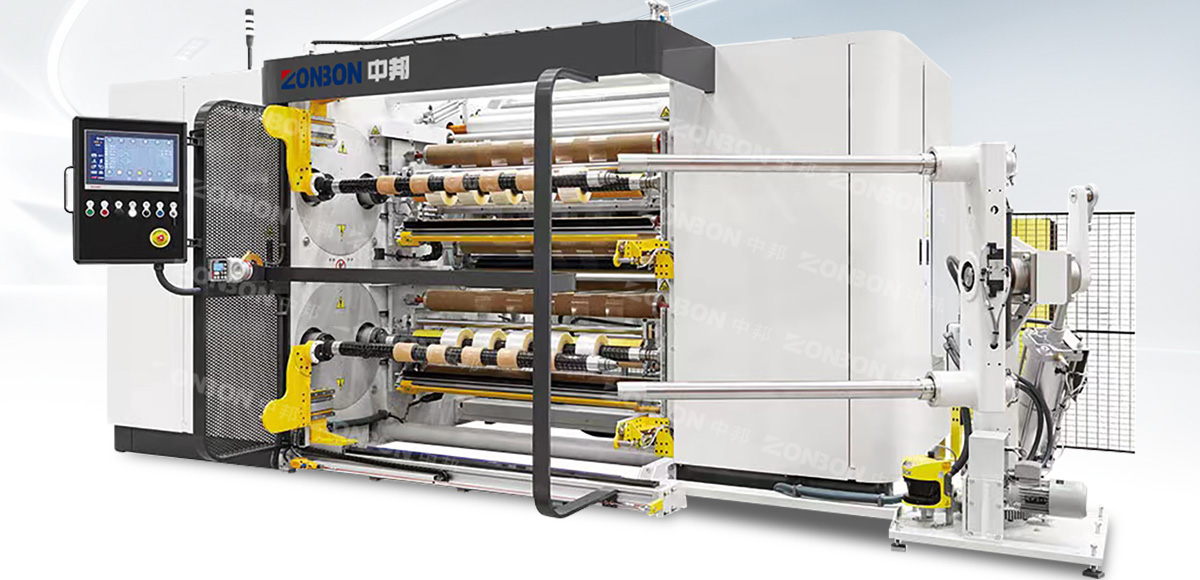
Buyers comparing different machine configurations can also reviewZONBON Slitting Machinesaccording to their material, parent-roll dimensions, finished-width requirements, and rewinding needs.
For a dedicated Tear Tape Slitting Machine, the final configuration should be confirmed against the actual tape material and finished-roll specification rather than selected from the machine name alone.
pre: -
next: -

Zonbon, The Most Professional Flexible Printing and Packaging Converting Machines Manufacturer Around You.
© 2011-2025 Zonbon Printing & Packaging Machinery Co., Ltd. All Rights Reserved