Blogs
We share with you the latest industry trends, try to solve all your questions about flexible packaging machines and printing machines as well. Read our blogs to keep abreast of what’s new in the industry and in Zonbon.

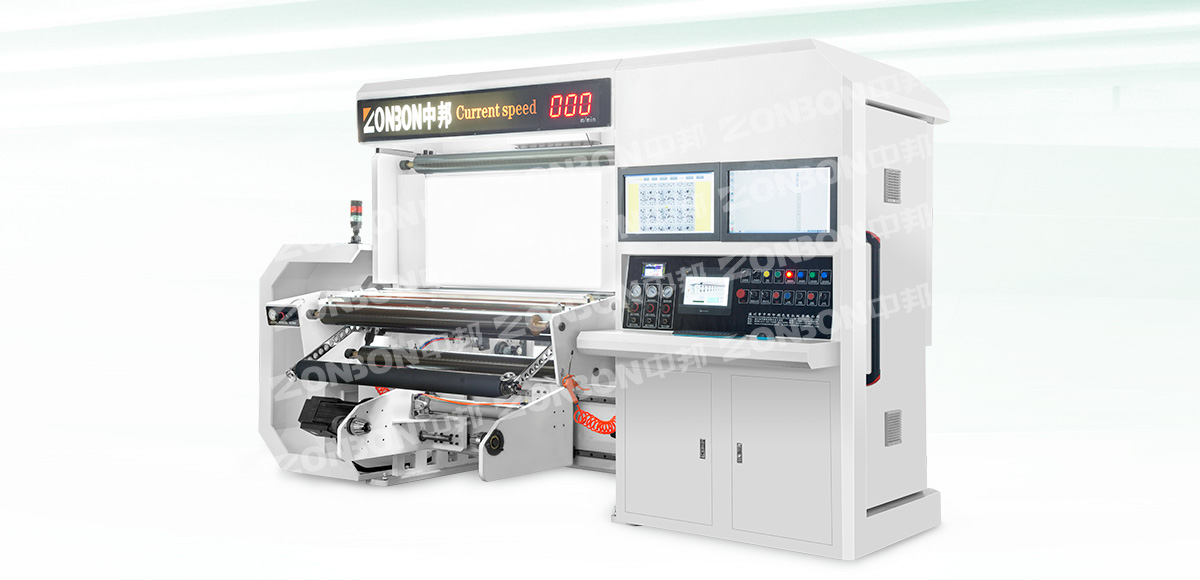
A slitter rewinder is one of the most important converting machines for processing roll materials into narrower rolls with accurate widths and consistent winding quality. It is widely used in flexible packaging, paper converting, aluminum foil processing, adhesive tape production, and other roll-to-roll manufacturing industries.
For global buyers, selecting the right slitter rewinder requires more than comparing machine speed or specifications. Factors such as material characteristics, cutting technology, tension control, rewinding requirements, and production goals all influence the final machine configuration.
This buying guide explains the working principle, main components, important selection factors, and key questions buyers should consider before investing in a slitter rewinder machine.
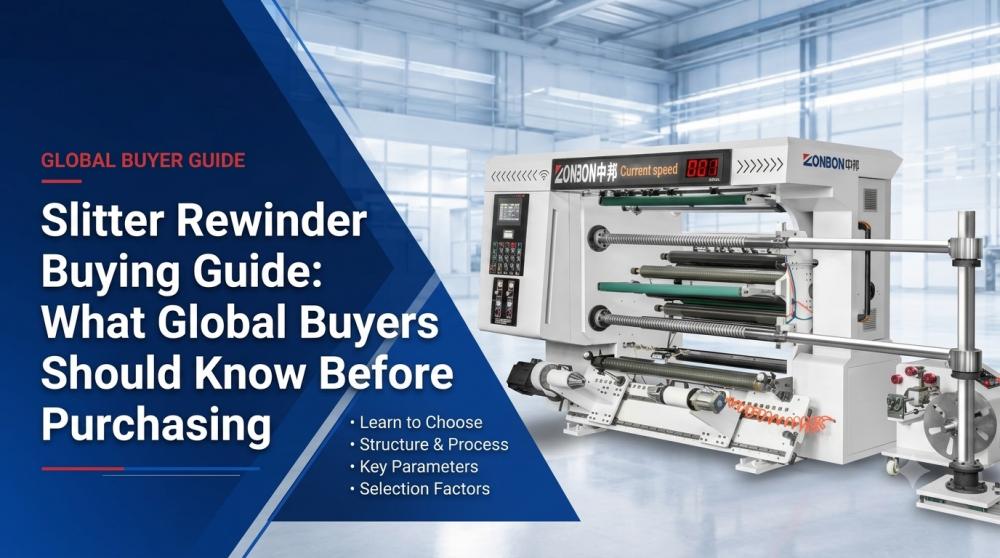
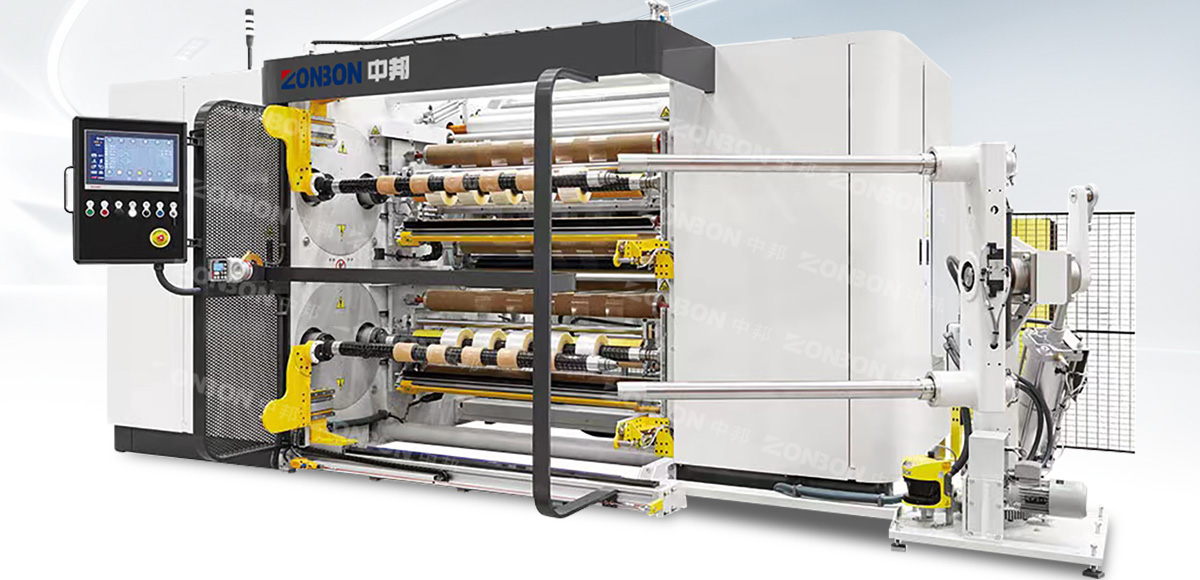
A slitter rewinder is an industrial converting machine designed to slit large parent rolls into multiple narrower rolls while rewinding the finished rolls with controlled tension and accurate alignment.
Unlike simple cutting equipment, a slitter rewinder combines three main processes:
Unwinding: Feeding the large parent roll into the machine with stable web movement.
Slitting: Cutting the wide material into required widths using suitable cutting methods.
Rewinding: Creating finished rolls with controlled tension, consistent hardness, and accurate edges.
Because the machine directly affects finished roll quality, slitter rewinders are widely used by manufacturers that require precise converting of films, papers, foils, tapes, and other flexible materials.
The terms slitter rewinder and slitting machine are often used interchangeably, but there are slight differences depending on industry applications and machine configuration.
| Comparison | Slitter Rewinder | Slitting Machine |
|---|---|---|
| Main Function | Slitting and rewinding large rolls into finished rolls | General term for machines performing material slitting |
| Application | Industrial roll-to-roll production | Various cutting and converting applications |
| Rewinding System | Usually includes advanced rewinding control | May have different winding configurations |
| Typical Users | Packaging converters, film producers, paper processors | Broad range of material processors |
A slitter rewinder processes roll materials through a continuous converting process. The machine maintains stable web movement while controlling cutting accuracy and rewinding quality.
The parent roll is installed on the unwinding section, where the material is gradually released into the machine. A stable unwinding system helps maintain consistent feeding and prevents material tension fluctuations.
Important factors include:
Maximum roll diameter
Roll loading method
Brake control system
Material alignment control
Tension control is one of the most critical processes in slitter rewinder operation. Proper tension ensures stable material movement, accurate cutting, and high-quality finished rolls.
Poor tension control may cause problems such as:
Wrinkles
Uneven roll hardness
Telescoping rolls
Material deformation
During slitting, the machine cuts the wide parent roll into multiple narrower rolls according to customer requirements. The cutting method should be selected based on material type, thickness, and final product requirements.
Common slitting methods include:
Razor cutting
Shear cutting
Crush cutting
After slitting, the narrower rolls are rewound into finished products. The rewinding system controls roll tightness, edge quality, and final roll appearance.
Advanced rewinding systems may include differential shafts, automatic positioning, and tension adjustment functions to improve finished roll consistency.
For packaging manufacturers and material processors, a slitter rewinder directly influences production efficiency, material utilization, and finished product quality.
| Production Requirement | How Slitter Rewinder Helps |
|---|---|
| Higher Productivity | Processes large parent rolls efficiently into saleable finished rolls. |
| Better Material Utilization | Accurate cutting reduces waste and improves material yield. |
| Consistent Roll Quality | Stable tension and rewinding improve finished roll performance. |
| Flexible Production | Allows manufacturers to produce different roll widths according to customer requirements. |
A slitter rewinder consists of multiple functional systems working together to achieve accurate slitting and stable rewinding. When comparing different machines, buyers should evaluate each major component because these systems directly affect production stability, finished roll quality, and long-term operating performance.
Although machine appearance may look similar between different suppliers, differences in mechanical structure, control systems, and component selection can significantly influence actual production results.
The unwinding system is responsible for loading and feeding the parent roll into the slitter rewinder. A stable unwinding process ensures continuous material movement and provides the foundation for accurate slitting.
For global buyers, important unwinding factors include:
Maximum parent roll diameter
Maximum roll weight
Roll loading method
Brake control technology
Automatic web alignment system
| Unwinding Type | Features | Suitable Applications |
|---|---|---|
| Shafted Unwind | Traditional roll mounting system with stable support and simple operation. | General paper, film, and packaging materials. |
| Shaftless Unwind | Allows faster roll loading and improves operator efficiency. | Medium and large production environments. |
| Automatic Unwind System | Reduces manual operation and improves continuous production capability. | High-volume industrial production. |
The tension control system is one of the most important technologies in a slitter rewinder. It maintains consistent material tension throughout the entire converting process, from unwinding to rewinding.
Stable tension control helps achieve:
Accurate slitting width
Smooth roll surface
Reduced wrinkles
Consistent roll hardness
Better finished product quality
| Technology | Function |
|---|---|
| Magnetic Powder Brake | Provides stable braking force during unwinding. |
| Dancer Roller System | Automatically compensates for tension fluctuations. |
| Load Cell Control | Measures actual tension and provides accurate feedback. |
| Servo Tension Control | Provides high precision control for demanding applications. |
The slitting system determines how the parent roll is divided into narrower rolls. Selecting the correct cutting method is essential because different materials require different cutting technologies.
| Cutting Method | Main Features | Typical Applications |
|---|---|---|
| Razor Slitting | High-speed cutting with clean edges for thin materials. | Plastic films, BOPP, PET, PE. |
| Shear Slitting | Uses upper and lower knives for precise cutting. | Paper, films, laminated materials. |
| Crush Cutting | Simple structure suitable for thicker materials. | Nonwoven materials, thick films, industrial materials. |
The rewinding system determines the quality of the finished rolls after slitting. A good rewinding system should maintain stable tension, accurate roll positioning, and consistent roll hardness.
Finished roll diameter requirement
Roll hardness control
Core size compatibility
Edge alignment accuracy
Automatic unloading requirements
The rewinding shaft design affects finished roll quality, especially when multiple narrow rolls are produced simultaneously. Differential shafts and air shafts are two common solutions used in modern slitter rewinders.
| Comparison | Differential Shaft | Air Shaft |
|---|---|---|
| Main Advantage | Controls tension differences between individual rolls. | Simple structure and reliable roll holding. |
| Suitable For | High-precision film and flexible packaging applications. | General roll converting applications. |
| Roll Quality | Excellent consistency for multiple narrow rolls. | Stable performance for standard applications. |
| Investment Level | Higher configuration level. | More economical solution. |
Modern slitter rewinders use PLC and servo control systems to improve machine accuracy, automation, and operational convenience.
Advanced control systems can manage:
Speed synchronization
Tension adjustment
Position control
Machine parameter storage
Operator interface management
When purchasing a slitter rewinder, buyers should not evaluate only basic specifications such as working width and speed. The quality and design of each functional system determine whether the machine can maintain stable production over years of operation.
| Component | Influence on Production |
|---|---|
| Tension System | Determines material stability and finished roll quality. |
| Cutting System | Affects edge quality and application suitability. |
| Rewinding System | Controls final roll appearance and usability. |
| Control System | Improves automation and operating efficiency. |
Choosing the right slitter rewinder requires a clear understanding of your materials, production requirements, finished roll specifications, and future business plans. A suitable machine configuration should match your actual converting process instead of simply selecting the highest speed or most advanced model.
The following factors can help global buyers evaluate the right slitter rewinder solution before purchasing.
The processed material is one of the most important factors when selecting a slitter rewinder. Different materials have different requirements for cutting methods, tension control, and rewinding performance.
Plastic films such as BOPP, PET, PE, CPP, and laminated films are widely used in flexible packaging production. These materials usually require precise tension control and stable rewinding to maintain roll quality.
High accuracy tension control
Clean cutting edges
Stable rewinding performance
Low material waste
Paper slitting applications usually focus on productivity, roll handling efficiency, and reliable cutting performance. Common applications include packaging paper, printing paper, kraft paper, and coated paper.
High production efficiency
Suitable cutting system
Stable roll formation
Aluminum foil requires careful handling because it is thin, sensitive, and easily affected by tension fluctuations. A suitable slitter rewinder should provide accurate tension control and smooth material transportation.
Low tension operation
Surface protection
Precise rewinding
Adhesive tapes require specialized slitting solutions because the adhesive layer can affect cutting performance and finished roll quality.
Suitable knife configuration
Adhesive material handling capability
Consistent roll winding
Production capacity requirements directly influence the machine structure, working width, speed, and automation level. Buyers should evaluate current production needs while considering future expansion.
| Production Requirement | Recommended Consideration |
|---|---|
| Small and medium production | Standard configuration with suitable automation level and flexible operation. |
| Multiple daily production orders | Automatic tension control and efficient roll changing systems. |
| Large-scale continuous production | High-speed slitter rewinder with advanced automation and stable operation. |
Working width and roll dimensions are basic parameters that determine machine structure. Selecting the correct size helps avoid production limitations in the future.
| Parameter | Why It Matters |
|---|---|
| Maximum Web Width | Determines the maximum parent roll size the machine can process. |
| Maximum Unwind Diameter | Affects production efficiency and roll replacement frequency. |
| Maximum Rewind Diameter | Determines finished roll size capability. |
| Finished Roll Width | Ensures compatibility with customer requirements. |
Automation level should match production volume, labor availability, and operational requirements. More automation can improve efficiency, but buyers should select functions that provide real production benefits.
| Automation Level | Suitable For |
|---|---|
| Basic Configuration | Small production, standard materials, lower automation requirements. |
| Semi-Automatic Configuration | Medium production requiring improved efficiency and easier operation. |
| Fully Automatic Configuration | High-volume production requiring reduced labor and continuous operation. |
When comparing different slitter rewinder machines, buyers should focus on technical parameters that directly influence production performance.
| Parameter | Importance |
|---|---|
| Slitting Speed | Determines production capacity but should be balanced with material stability. |
| Tension Control Range | Affects roll quality, especially for thin films and sensitive materials. |
| Cutting Accuracy | Determines finished roll width consistency. |
| Rewinding Accuracy | Influences roll appearance and downstream processing performance. |
| Control System | Affects operation convenience and automation capability. |
Many buyers purchase equipment with current production requirements in mind but overlook future business growth. Selecting a machine with reasonable expansion capability can avoid replacing equipment too early.
Future considerations may include:
New material types
Higher production volume
Larger roll sizes
Additional automation requirements
Higher speed does not always mean better production results. If tension control, cutting accuracy, or rewinding stability cannot match the speed, production problems may increase.
A machine designed for one material may not provide ideal performance for another material. Buyers should always select equipment according to actual material properties.
Specifications are important, but practical factors such as engineering experience, application knowledge, and technical support are equally important when selecting a long-term production partner.
Before contacting manufacturers, buyers can prepare the following information to improve communication efficiency and receive more accurate recommendations.
| Information Required | Confirmed |
|---|---|
| Material type | ☐ |
| Material thickness range | ☐ |
| Maximum roll width | ☐ |
| Finished roll requirements | ☐ |
| Required production speed | ☐ |
| Cutting method requirement | ☐ |
| Automation expectation | ☐ |
Slitter rewinders are widely used in industries that process roll materials requiring accurate width conversion and consistent rewinding quality. The machine configuration should be selected according to the characteristics of each application.
Flexible packaging is one of the most common applications for slitter rewinders. Materials such as BOPP, PET, PE, CPP, and laminated films require stable tension control and precise slitting to maintain quality during printing, laminating, and packaging processes.
Important requirements include:
High precision tension control
Stable rewinding quality
Low material waste
Consistent finished roll width
Paper processors use slitter rewinders for converting large paper rolls into smaller rolls for packaging, printing, labeling, and industrial applications.
Common considerations include:
High production efficiency
Reliable cutting performance
Suitable roll handling systems
Stable long-term operation
Aluminum foil is sensitive to tension changes and surface damage, making precise control important during slitting and rewinding.
A suitable slitter rewinder should provide:
Accurate tension adjustment
Smooth material transportation
Clean cutting edges
Protection against surface defects
Adhesive tape manufacturers require specialized slitting solutions because adhesive materials can affect cutting performance and rewinding results.
Key requirements include:
Suitable knife configuration
Stable roll winding
Accurate width control
Consistent product appearance
Before selecting a supplier, buyers should prepare detailed production information and discuss technical requirements with manufacturers. This helps avoid selecting equipment that does not match actual production conditions.
| Question | Why It Matters |
|---|---|
| What materials will be processed? | Determines suitable cutting methods and tension control requirements. |
| What is the material thickness range? | Affects machine structure and cutting system selection. |
| What are the parent roll and finished roll sizes? | Determines unwinding and rewinding configuration. |
| What finished roll quality is required? | Influences rewinding technology and tension accuracy. |
| Is future production expansion expected? | Helps select a machine with suitable upgrade capability. |
| What level of automation is required? | Balances labor efficiency and investment requirements. |
Providing complete production information allows manufacturers to recommend a more suitable machine configuration. Before requesting a solution, buyers should prepare:
Material samples or detailed material specifications
Current production requirements
Required roll dimensions
Expected output capacity
Special processing requirements
Automation expectations
A slitter rewinder performs both material cutting and rewinding processes, while the term slitter is a broader description of equipment used for dividing roll materials. Slitter rewinders are commonly used when finished rolls with controlled width and winding quality are required.
A slitter rewinder can process many roll materials including plastic films, paper, aluminum foil, adhesive tapes, labels, and laminated materials. The machine configuration should be selected according to material thickness, flexibility, and production requirements.
Tension control ensures stable material movement and consistent rewinding quality. Proper tension helps prevent wrinkles, uneven rolls, telescoping, and other quality problems during production.
Razor and shear cutting are commonly used for film materials because they provide clean cutting edges and accurate width control. The best method depends on film type, thickness, production speed, and finished product requirements.
A differential shaft is usually recommended for applications requiring high roll consistency and multiple narrow rolls, while an air shaft provides a reliable solution for general roll converting applications. The choice depends on material type and finished roll requirements.
Slitter rewinder speed varies depending on machine design, material characteristics, and production requirements. Buyers should consider not only maximum speed but also whether the machine can maintain stable tension, cutting accuracy, and finished roll quality.
Important information includes material type, thickness, roll width, roll diameter, finished roll size, production speed, cutting requirements, and automation expectations. These details help manufacturers recommend a suitable configuration.
Yes. Slitter rewinders can often be customized according to working width, material requirements, cutting methods, rewinding structure, automation level, and special production needs.
A properly maintained industrial slitter rewinder can typically provide many years of reliable production. Service life depends on machine quality, operating conditions, maintenance practices, and replacement of wear components.
Learn more about slitting technology, machine selection, and supplier evaluation through related guides.
Selecting the right slitter rewinder requires a complete understanding of material characteristics, production requirements, machine structure, and finished roll expectations. The best equipment choice is not simply the machine with the highest speed or most functions, but the solution that matches the actual production process.
For global buyers, evaluating key systems such as tension control, cutting technology, rewinding performance, and automation level can help build a reliable converting process and achieve consistent production results.
pre: -
next: -
Zonbon, The Most Professional Flexible Printing and Packaging Converting Machines Manufacturer Around You.
© 2011-2025 Zonbon Printing & Packaging Machinery Co., Ltd. All Rights Reserved