Blogs
We share with you the latest industry trends, try to solve all your questions about flexible packaging machines and printing machines as well. Read our blogs to keep abreast of what’s new in the industry and in Zonbon.

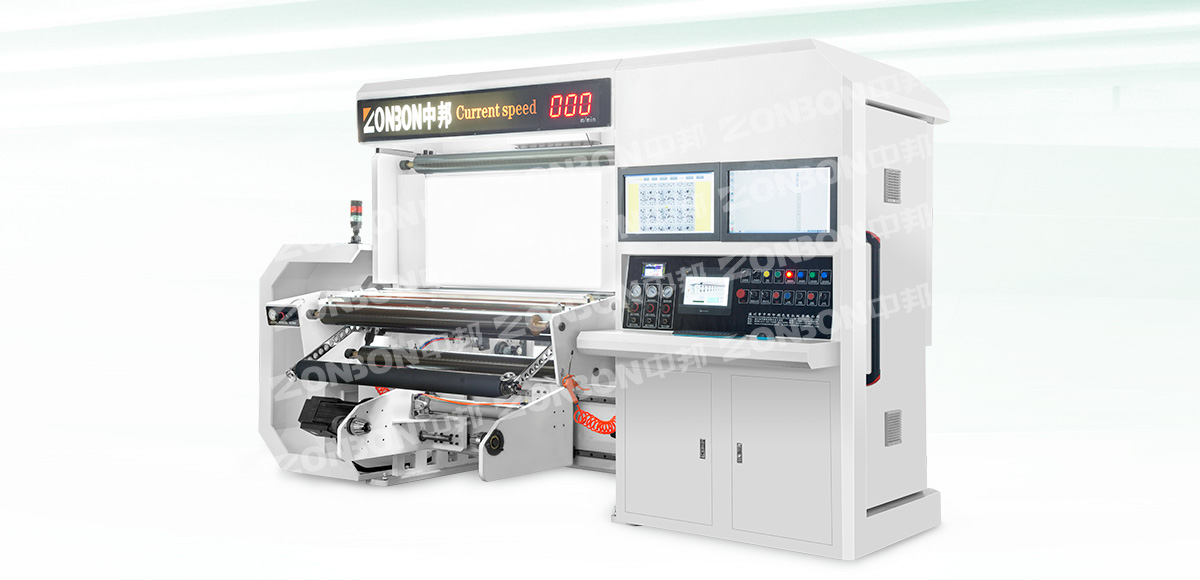
In modern industrial manufacturing, precision and efficiency are paramount. One of the key machines that facilitate high-volume material processing is the slitting machine. This specialized equipment is widely used across industries such as metalworking, paper production, textiles, and plastics to cut large rolls or sheets of material into narrower strips with high accuracy.
ZONBON Machinery, as a leading manufacturer of industrial cutting solutions, provides advanced slitting machines designed for durability, precision, and automation. In this article, we will explore the fundamentals of slitting machines, their types, working principles, applications, and key considerations for selecting the right machine for your production needs.
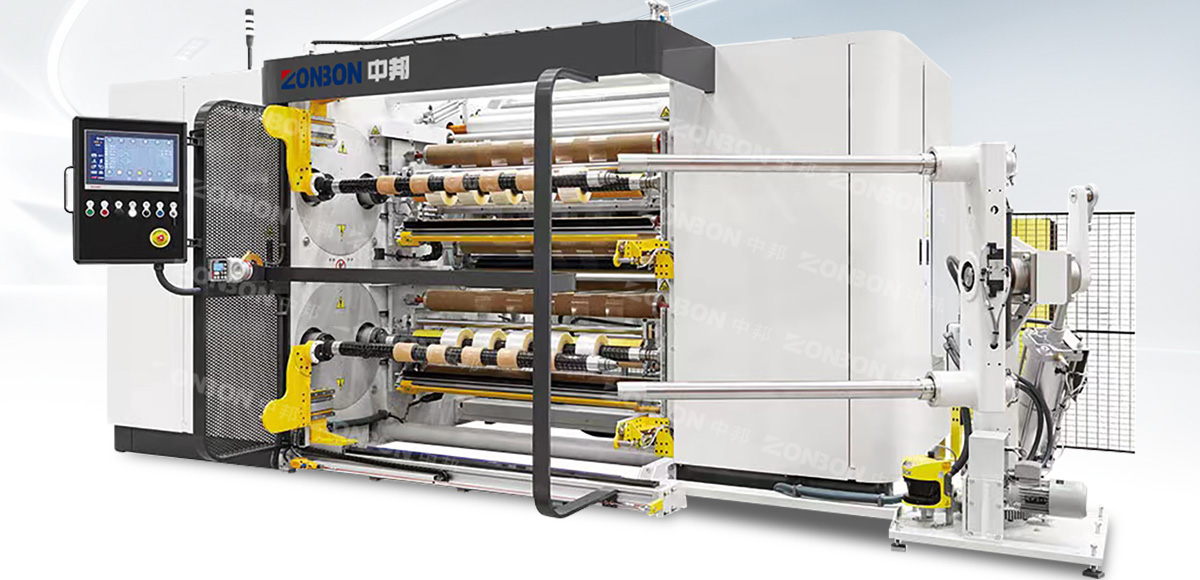
A slitting machine (also known as a slitter, slitter rewinder, or slitting line) is an industrial cutting system designed to divide large rolls or sheets of material into narrower widths. The process involves unwinding the master roll, passing it through precision cutting tools, and rewinding the slit strips into individual coils.
Slitting machines are essential in industries requiring continuous processing of materials such as:
Metal coils (steel, aluminum, copper)
Paper & film (packaging, labels, adhesive tapes)
Textiles & non-woven fabrics
Plastics & rubber sheets
Slitting machines can be categorized based on their cutting mechanism and application. The most common types include:
Uses circular blades that rotate against each other to shear the material.
Ideal for thick metals, rigid plastics, and dense materials.
Provides clean, burr-free edges.
Employs sharp razor blades to score and separate thin, flexible materials.
Commonly used for films, foils, and thin paper products.
Minimal material deformation due to non-contact cutting.
Uses a hardened steel blade pressing against a rubber or steel anvil roll.
Suitable for soft materials like rubber, foam, and non-woven fabrics.
Cost-effective but may produce slight edge deformation.
Utilizes high-precision laser beams for ultra-thin and heat-sensitive materials.
Used in electronics, medical films, and composite materials.
Delivers smooth, sealed edges without mechanical stress.
The slitting process typically involves the following stages:
The master roll is loaded onto an unwinding stand and fed into the machine.
Tension control ensures smooth material flow.
The material passes through precision cutting tools (blades or lasers).
The number of slits depends on the required strip widths.
Excess material (if any) is trimmed for uniform strip dimensions.
The slit strips are wound onto separate cores for further processing.
Modern slitters feature PLC control, touchscreen interfaces, and servo-driven adjustments for high repeatability.
Slitting machines serve diverse industries by enabling efficient material processing:
Metal Industry: Producing narrow steel/aluminum strips for automotive, construction, and appliances.
Packaging: Cutting plastic films, laminates, and adhesive tapes for labeling and sealing.
Textiles & Non-Wovens: Converting large fabric rolls into strips for medical, hygiene, and apparel uses.
Paper & Printing: Slitting paper rolls for books, magazines, and packaging materials.
Electronics: Precision-cutting flexible circuits, insulating films, and conductive foils.
When selecting a slitting machine, consider the following factors:
Hard metals require rotary shear slitting, while thin films work best with razor or laser slitting.
High-speed lines need servo-controlled tension systems for consistent quality.
Semi-automatic vs. fully automatic slitters (ZONBON offers custom automation solutions).
Carbide-tipped or laser-cut blades ensure longevity and reduced downtime.
Machines should meet CE, ISO, or OSHA standards for operator safety.
ZONBON Machinery provides custom-engineered slitting solutions tailored to your production demands, ensuring high efficiency, precision, and ROI.
A slitting machine is an indispensable asset in industrial manufacturing, enabling precise material conversion for various sectors. With advancements in automation and cutting technology, modern slitters deliver higher speeds, tighter tolerances, and reduced waste.
As a trusted provider of high-performance slitting machines, ZONBON Machinery combines engineering excellence, robust construction, and intelligent controls to optimize your production line.
For more information on custom slitting solutions, contact ZONBON Machinery today!
pre: -
next: -
Zonbon, The Most Professional Flexible Printing and Packaging Converting Machines Manufacturer Around You.
© 2011-2025 Zonbon Printing & Packaging Machinery Co., Ltd. All Rights Reserved