Blogs
We share with you the latest industry trends, try to solve all your questions about flexible packaging machines and printing machines as well. Read our blogs to keep abreast of what’s new in the industry and in Zonbon.
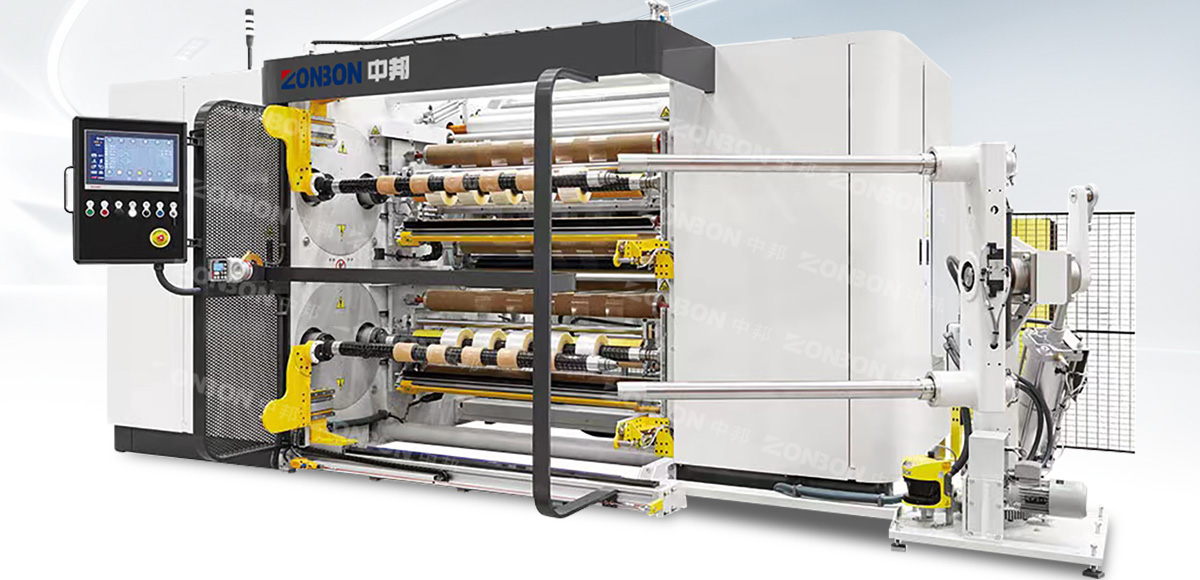
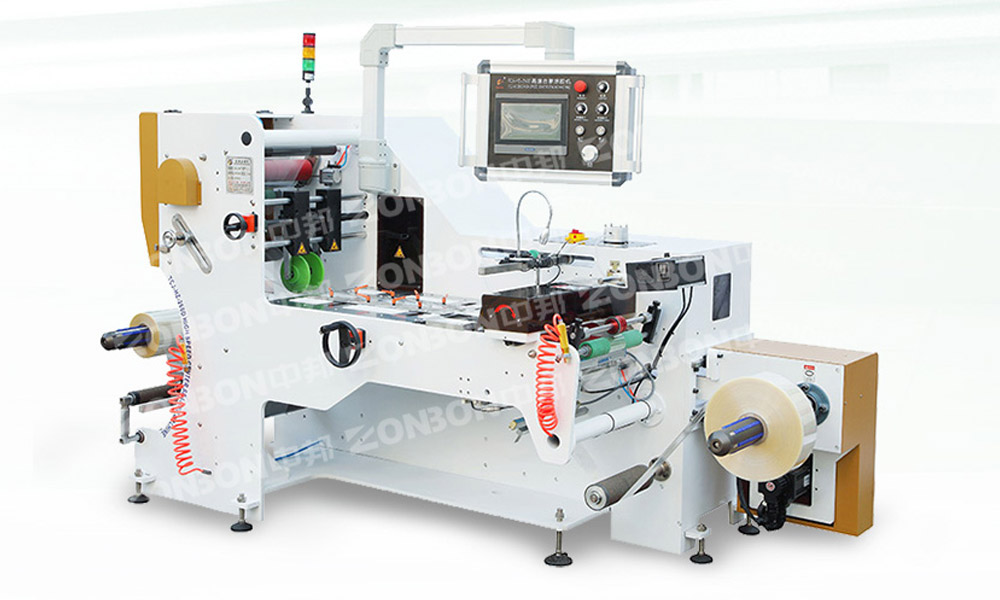
In modern industrial production, slitters, as core equipment for coil processing, rely heavily on the intelligence and automation of their supporting systems to determine production efficiency and product quality. With the advancement of Industry 4.0, technologies such as automatic blade positioning, auto loading/unloading, PLC control, touchscreen HMI, servo drive systems, ERP integration, and edge position control have become essential components of high-end slitter configurations. This article provides a professional and rigorous selection guide, focusing on these key supporting technologies and mainstream market brands.
The Automatic Blade Positioning System (Auto Blade Positioning System) achieves rapid blade seat positioning through high-precision servo control, reducing manual adjustment time and improving cutting accuracy.
Core Technologies and Brand Selection
Servo Drive: High-response servo motors (e.g., Panasonic MINAS A6, Yaskawa Σ-7) ensure blade seat positioning accuracy of ±0.05mm.
Motion Control: High-performance PLCs (e.g., Siemens S7-1200, Mitsubishi FX5U) enable multi-axis synchronization.
Brand Recommendations:
Italy’s Rotomac: Modular design supporting multi-blade synchronous adjustment.
Germany’s Kampf: Intelligent algorithms optimize blade positioning paths, minimizing material waste.
The Auto Loading/Unloading System utilizes robotic arms or conveyors to achieve unmanned coil handling, enhancing continuous operation capability.
Key Technical Considerations
Robotic Arm Selection:
ABB IRB 4600: High load capacity (60kg) and repeatability (±0.02mm).
Fanuc M-20iD: Compact solution for narrow-width slitters.
Conveyor System:
Interroll motorized rollers, compatible with ERP scheduling commands.
3.1 PLC Selection
Siemens S7-1500: Supports Profinet bus, ideal for multi-axis control in high-speed slitters.
Mitsubishi Q Series: Built-in positioning modules, cost-effective.
Omron NJ Series: Suitable for lightweight slitters, supports EtherCAT.
3.2 Touchscreen (HMI)
Siemens KTP1200: 12-inch high-brightness display with multi-touch support.
Weintek cMT Series: Open protocol, customizable development.
Slitters demand high tension control, requiring servo systems with dynamic responsiveness:
Brand Recommendations:
Yaskawa Σ-7: Low-speed high torque, suitable for heavy coil slitting.
Panasonic MINAS A6: Supports 23-bit encoder, positioning accuracy up to ±1 pulse.
Delta ASDA-B3: Economical solution with built-in electronic cam function.
Real-time production data (e.g., order numbers, slitting specifications, output statistics) transmission requires:
Communication Protocols: OPC UA, MODBUS TCP, or REST API.
Typical Solutions:
SAP MES Interface: Data bridging via Siemens WinCC Unified.
UFIDA U9: Deep integration with Mitsubishi PLCs.
The Edge Position Control (EPC) system prevents material deviation during slitting:
Technology Types:
Photoelectric (e.g., BST ELT-500): Suitable for transparent films.
Ultrasonic (e.g., Fife 5100): Strong resistance to dust interference.
Brand Comparison:
Brand | Accuracy (mm) | Response Time (ms) | Applicable Materials
BST | ±0.1 | 10 | Films, non-woven fabrics
Fife | ±0.05 | 5 | Metal foils, high-reflectivity materials
Based on slitter application scenarios, the following configurations are recommended:
High-End Configuration: Kampf auto blade positioning + ABB loading/unloading + Siemens S7-1500 + Yaskawa Σ-7 servo + Fife EPC.
Budget Configuration: Domestic blade positioning module + Delta servo + Weintek HMI + BST EPC.
The intelligent upgrade of slitters requires extending from standalone automation (e.g., blade positioning, loading/unloading) to system integration (PLC, ERP). Enterprises should consider budget, material characteristics, and production capacity needs when selecting configurations, prioritizing solutions with open protocols and strong scalability. ZONBON Technology Team offers customized slitter system integration services to help clients achieve efficient and precise production.
pre: -
next: -
Zonbon, The Most Professional Flexible Printing and Packaging Converting Machines Manufacturer Around You.
© 2011-2025 Zonbon Printing & Packaging Machinery Co., Ltd. All Rights Reserved