Blogs
We share with you the latest industry trends, try to solve all your questions about flexible packaging machines and printing machines as well. Read our blogs to keep abreast of what’s new in the industry and in Zonbon.

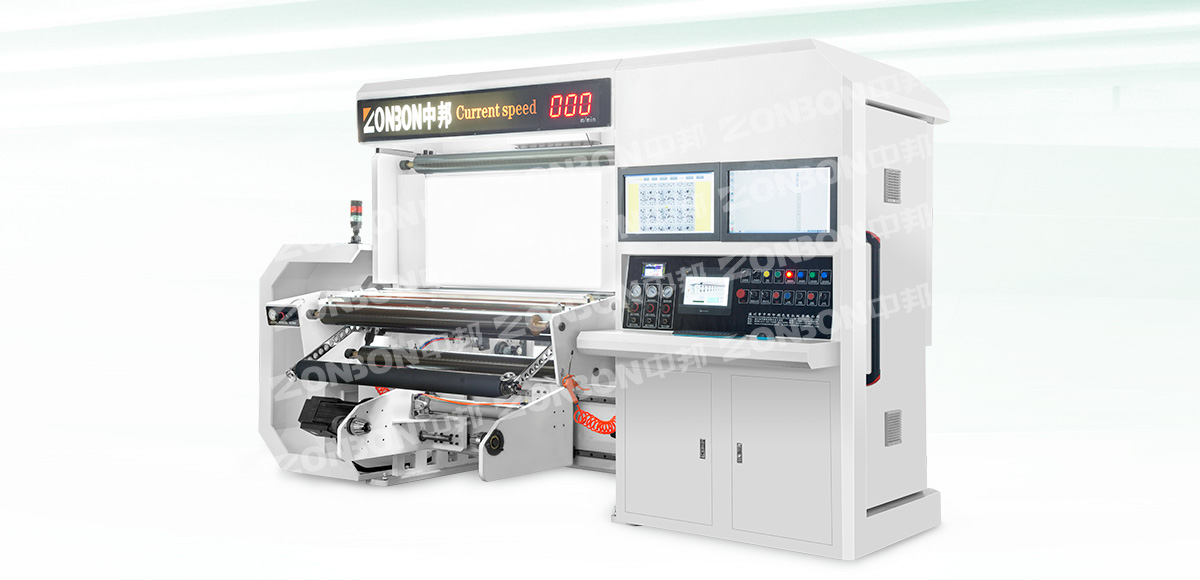
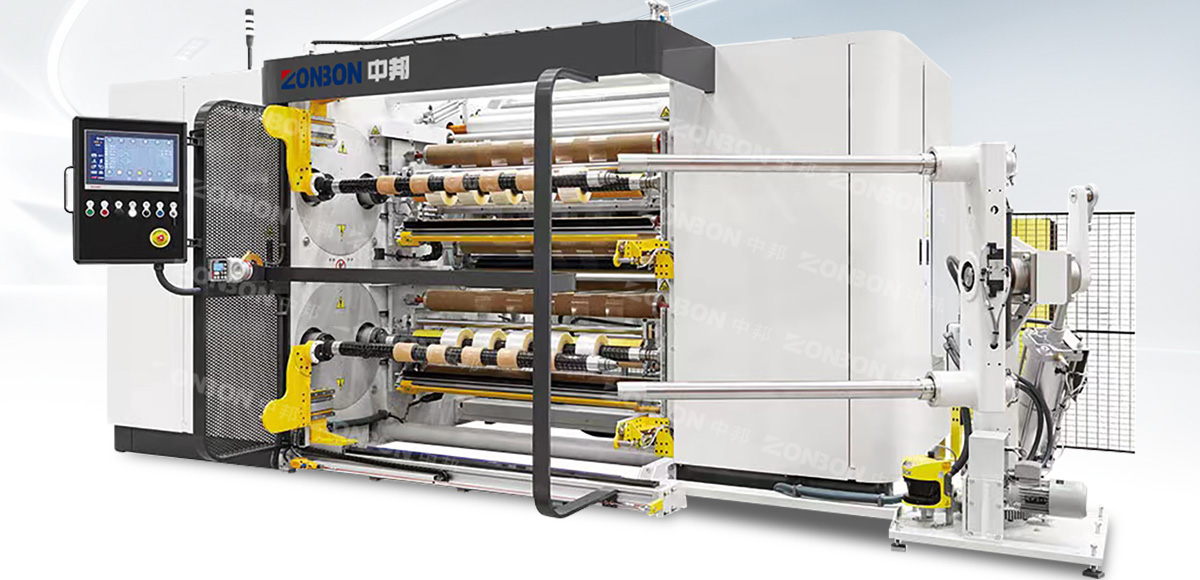
In industries such as packaging, printing, film, and nonwoven fabrics, slitters are one of the core processing equipment, and their selection directly impacts production efficiency and product quality. This article will provide professional guidance on slitter selection based on key parameters such as material width, unwind diameter, rewind diameter, slit product width, rewinding method, slitting method, cutting tools, and slitting speed, helping enterprises optimize their production processes.
Material Width: Refers to the width of the raw material to be slit. The equipment must be selected based on the maximum processing width of the slitter. For example, if the raw material width is 2000mm, a slitter with a maximum slitting width of ≥2000mm should be chosen.
Slit Product Width: Refers to the width of the individual rolls after slitting. This must be matched with the slitter's cutting precision (typically ±0.1mm~±0.5mm) and minimum slit width (e.g., 10mm).
Number of Slits Calculation: Number of slits = raw material width / product width. Ensure the slitter's blade holder capacity meets the requirements.
Unwind Diameter: Refers to the maximum outer diameter of the raw material roll, directly affecting the unwind mechanism's load capacity. Common unwind diameters range from Φ300mm~Φ1500mm, with heavy-duty slitters capable of handling up to Φ2500mm.
Rewind Diameter: Refers to the maximum outer diameter of the finished roll, which must match the torque and tension control capabilities of the rewinding mechanism. The rewind diameter is typically similar to the unwind diameter, but some high-speed slitters may impose limits (e.g., below Φ800mm).
Core Specifications: Ensure consistency between the unwind and rewind core inner diameters (e.g., 3", 6") to avoid compatibility issues.
The rewinding method directly affects the quality of the slit material. Common types include:
Center Rewinding: Driven directly by a motor, suitable for high-tension materials (e.g., PET film, aluminum foil).
Surface Rewinding: Uses a friction roller to drive the material, ideal for low-tension or stretch-prone materials (e.g., nonwoven fabric, PE film).
Dual-Position Rewinding: Enables continuous operation with roll changes, improving production efficiency, especially for high-speed slitting applications.
Slitting Methods
Rotary Blade Slitting: Suitable for high-precision slitting (e.g., lithium battery separators, optical films), delivering clean cuts and long tool life.
Straight Blade Slitting: Cost-effective, ideal for medium- to low-speed slitting (e.g., paper, corrugated board).
Air Knife Slitting: Non-contact slitting prevents material damage, suitable for adhesive-prone materials (e.g., tapes, protective films).
Tool Materials
Carbide Blades: High wear resistance, suitable for cutting hard materials (e.g., metallized films).
High-Speed Steel Blades: Economical and practical for general plastic films and paper.
Ceramic Blades: Anti-static, ideal for high-cleanliness materials in the electronics industry.
Slitting speed (unit: m/min) should be determined based on material properties, cutting precision, and equipment performance:
Low Speed (<100m/min): Suitable for thick materials (e.g., rubber sheets, leather) or high-precision slitting.
Medium Speed (100~300m/min): Common for films and paper slitting.
High Speed (>300m/min): Requires high-precision tension control systems and dynamic balancing blade holders.
Speed Matching Recommendations:
Thin materials (e.g., 12μm PET film) can achieve speeds up to 500m/min but require stable rewinding tension.
When slitting multiple narrow strips, reduce speed by 20%~30% to minimize edge burrs.
Tension Control: Closed-loop tension systems reduce material stretching or wrinkling during slitting.
Dust Removal System: Essential for dust-sensitive materials (e.g., lithium battery separators) to include static elimination or dust extraction.
Automation Level: Features like automatic edge alignment and online inspection reduce manual intervention.
Slitter selection should be based on a systematic evaluation of material characteristics, production requirements, and process parameters. Modular-designed machines are recommended for future scalability. As a leading slitting equipment supplier, ZONBON offers customized slitting solutions to help enterprises achieve efficient and precise material processing.
pre: -
next: -
Zonbon, The Most Professional Flexible Printing and Packaging Converting Machines Manufacturer Around You.
© 2011-2025 Zonbon Printing & Packaging Machinery Co., Ltd. All Rights Reserved