Blogs
We share with you the latest industry trends, try to solve all your questions about flexible packaging machines and printing machines as well. Read our blogs to keep abreast of what’s new in the industry and in Zonbon.

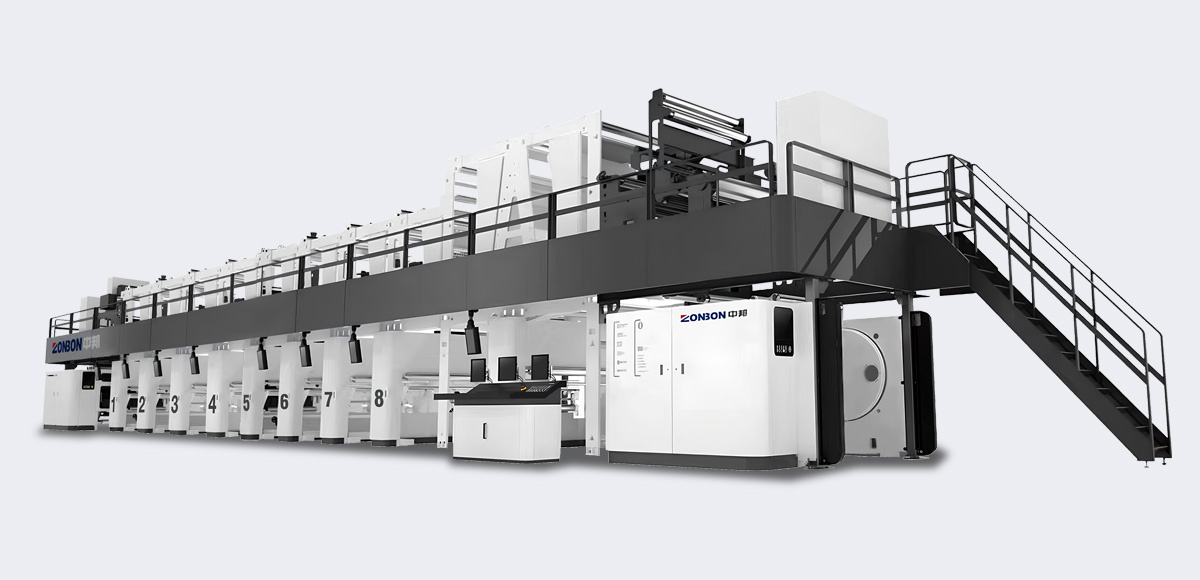
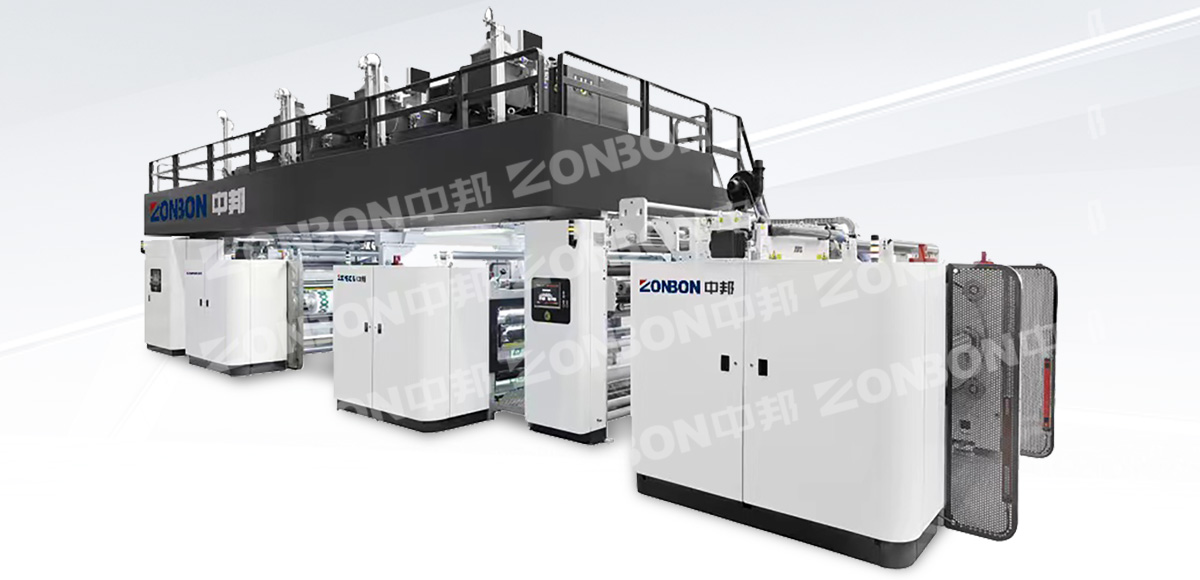
Gravure printing, as one of the four major printing methods, is renowned for its high print quality, thick ink layers, rich color saturation, and durable printing plates. It holds a significant position in packaging, publishing, and specialty printing. ZONBON Zhongbang Machinery, a leading manufacturer of printing equipment, offers gravure printing machines known for their high precision, stability, and intelligent control.
The fundamental principle of gravure printing relies on the "ink reservoir" transfer mechanism. During printing, ink is stored in the recessed cells of the printing cylinder, while excess ink on the raised areas is scraped off by a doctor blade. When the substrate passes between the impression roller and the printing cylinder, the ink in the recessed cells is transferred to the substrate under pressure, forming the desired image.
Modern gravure printing machines typically consist of the following core systems:
Unwinding System: Ensures smooth substrate feeding and tension control.
Printing Unit: Includes key components such as the printing cylinder, impression roller, ink pan, and doctor blade.
Drying System: Utilizes hot air, infrared, or UV curing for rapid ink drying.
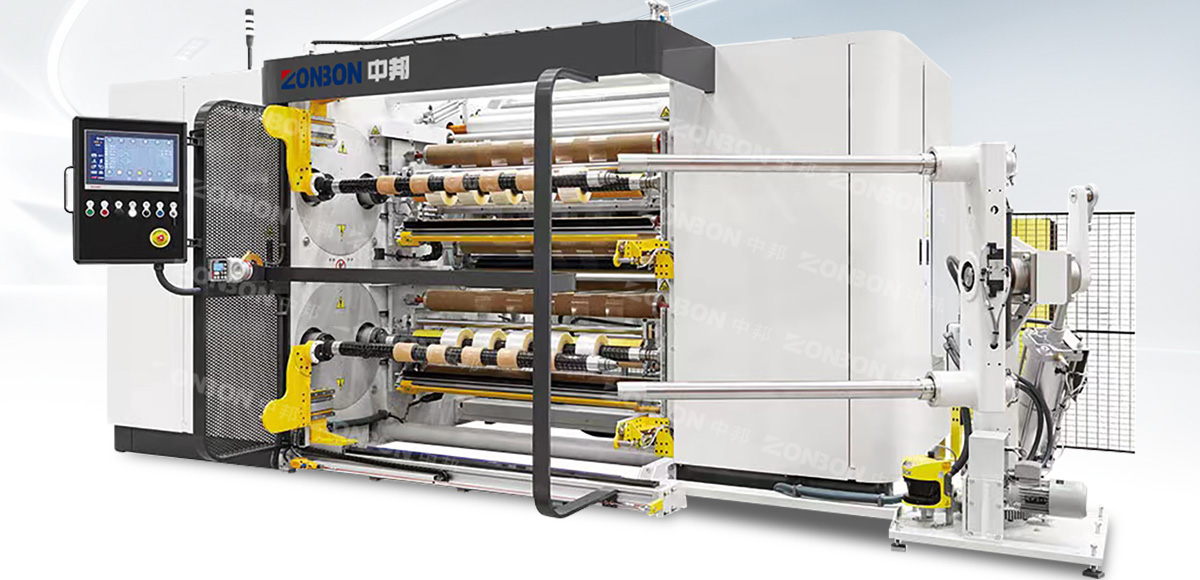
Rewinding System: Ensures neat winding of printed materials.
Tension Control System: Maintains consistent substrate tension throughout the process.
Registration System: Ensures precise alignment for multicolor printing.
2.1 Pre-Startup Preparations
Equipment Inspection is critical for ensuring stable print quality. Operators must verify the following according to ZONBON Zhongbang Machinery’s standard checklist:
Check lubrication points and replenish specified lubricants as needed.
Ensure pneumatic system pressure is stable (0.6–0.8 MPa).
Verify doctor blade angle (typically 55–65°) and pressure (3–5 kg/cm²).
Test safety devices (emergency stop buttons, protective covers, etc.).
Clean the ink pan, doctor blade holder, and ink circulation system.
Plate Preparation requires special attention:
Confirm plate cylinder specifications and engraving parameters per the work order.
Measure plate cylinder diameter and set correct printing pressure.
Inspect the plate surface for damage and clean it thoroughly.
Ensure proper plate cylinder and bearing alignment (radial runout ≤ 0.02 mm).
Ink Preparation Guidelines:
Dilute ink to optimal viscosity (typically 15–25 sec, measured with a #4 cup).
Stir thoroughly and allow bubbles to dissipate; add defoamer if necessary.
Maintain stable viscosity during printing using an automated control system.
2.2 Formal Printing Procedures
Startup Sequence:
Power on the main control system.
Run the machine at low speed to check unit coordination.
Gradually increase to target speed (typically 30–50 m/min initially).
Preheat the drying system to process temperature (60–80°C, depending on ink type).
Registration Adjustment is key to quality control:
Perform longitudinal registration by adjusting plate cylinder phase.
Adjust lateral registration using side guides.
With ZONBON’s intelligent registration system, multicolor alignment is automated.
Registration accuracy should be within ±0.1 mm.
Ink Color Control:
Initial ink volume is controlled by cell depth and ink viscosity.
Measure solid density with a spectrophotometer (target: 1.4–1.8D).
Fine-tune ink volume via doctor blade pressure and angle adjustments.
Establish a reference standard for subsequent production.
3.1 Key Process Parameter Controls
Printing Pressure directly affects ink transfer:
General range: 15–25 kg/cm².
Fine details: Lower pressure (15–18 kg/cm²).
Large solid areas: Higher pressure (20–25 kg/cm²).
ZONBON’s pneumatic pressure system allows precision to 0.1 kg/cm².
Speed and Drying Efficiency Balance:
Standard products: 80–150 m/min.
High-end products: 50–100 m/min.
Specialty materials: Adjust based on substrate properties.
Increase drying temperature or extend drying distance at higher speeds.
Dynamic Viscosity Management:
Establish viscosity-temperature curves for automatic compensation.
Manual checks every 30 minutes to cross-verify with automated systems.
Add solvent incrementally to avoid viscosity fluctuations.
3.2 Analysis and Solutions for Common Defects
Doctor Blade Streaks:
Blade nicks: Replace or reposition the blade.
Plate damage: Repair or replace the cylinder.
Ink contaminants: Filter ink or clean circulation systems.
Environmental dust: Improve workshop cleanliness.
Misregistration Solutions:
Unstable substrate tension: Check unwind/rewind tension control.
Plate cylinder diameter mismatch: Recalculate gear ratios.
Excessive drying shrinkage: Adjust drying temperature gradient.
Mechanical vibration: Inspect drive system alignment.
Ink Color Consistency:
Implement standardized density management.
Use closed-loop color control systems.
Regularly calibrate measurement tools.
Maintain ambient conditions (23±2°C, 50±5% RH).
4.1 Routine Maintenance
Daily Tasks:
Clean ink pumps, pans, and delivery lines.
Inspect doctor blade wear; replace if necessary.
Clean sensors and detection components.
Log operational parameters and anomalies.
Weekly Tasks:
Lubricate chains and gears.
Clean electrical cabinet filters; check terminals.
Test safety device responsiveness.
Calibrate tension detection systems.
4.2 Scheduled Maintenance Plans
Per ZONBON Zhongbang Machinery’s manual:
Monthly: Replace filters, check motor insulation, inspect air seals.
Quarterly: Disassemble key bearings, calibrate registration, test drying efficiency.
Annual Overhaul: Full inspection, replace wear parts, restore system accuracy.
Component Lifespan:
Doctor blades: 80–120 hours.
Impression roller covers: 6–12 months.
Drive belts: 2–3 years.
Servo motors: 5–8 years.
5.1 Digitalization and Smart Technologies
ZONBON’s Intelligent Control System Features:
AI algorithms for predictive maintenance.
Cloud-stored process parameters for quick recall.
Remote diagnostics to reduce downtime.
Energy management for optimized consumption.
Automation Advancements:
Automatic plate-changing systems reduce setup time.
Robotic material handling.
100% online visual inspection.
MES integration for digital production management.
5.2 Green Printing Technologies
Eco-Friendly Improvements:
Solvent recovery reduces VOC emissions by 90%.
Water-based gravure inks gain maturity.
Energy-recovery drying systems save 30–40%.
Solvent-free lamination applications.
Future Trends:
Nano-coated plates for extended life.
Electron-beam curing replaces traditional drying.
Hybrid digital-gravure solutions.
Smart factory integration.
Gravure printing, synonymous with high-quality output, demands skilled operators with deep technical knowledge. ZONBON Zhongbang Machinery’s continuous innovations enhance precision, efficiency, and sustainability. Mastering operational techniques, understanding process principles, and adhering to maintenance protocols are essential for maximizing performance. With advancements in smart and green technologies, gravure printing will remain indispensable in premium printing markets.
pre: -
next: -
Zonbon, The Most Professional Flexible Printing and Packaging Converting Machines Manufacturer Around You.
© 2011-2025 Zonbon Printing & Packaging Machinery Co., Ltd. All Rights Reserved