Blogs
We share with you the latest industry trends, try to solve all your questions about flexible packaging machines and printing machines as well. Read our blogs to keep abreast of what’s new in the industry and in Zonbon.

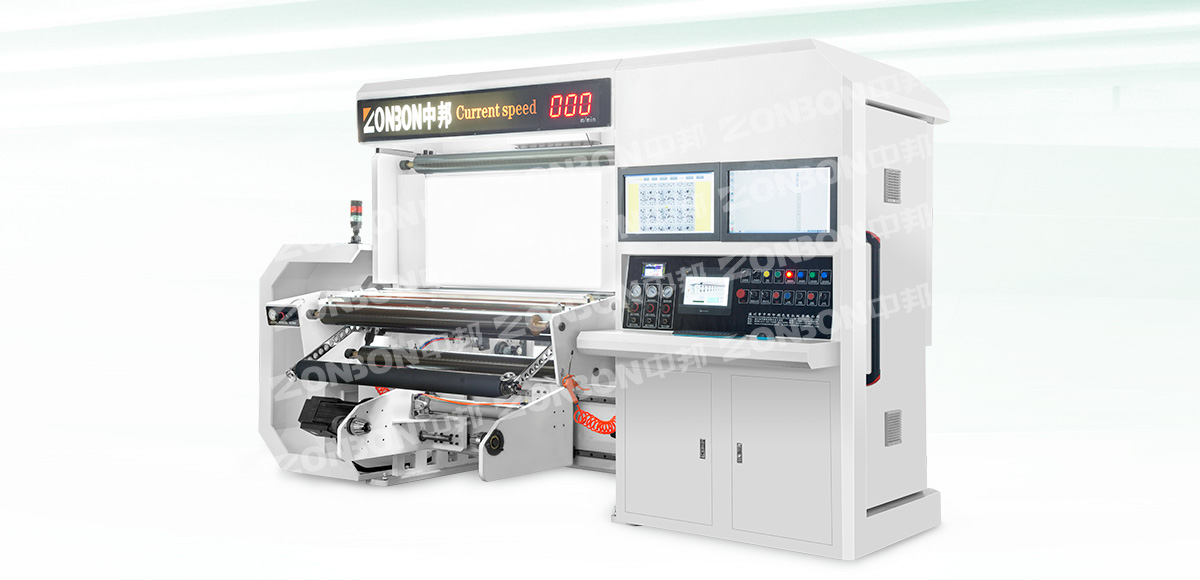
A slitting machine is a highly efficient cutting device widely used in industries such as packaging, printing, plastic films, paper, and metal foils. Its core function is to slit wide-format materials into narrower rolls of the desired width. Correct usage of a slitting machine not only enhances production efficiency but also extends equipment lifespan and ensures operational safety. This article provides a detailed guide on the proper usage methods, operational standards, and maintenance essentials for slitting machines, helping users optimize production processes and reduce equipment failures.
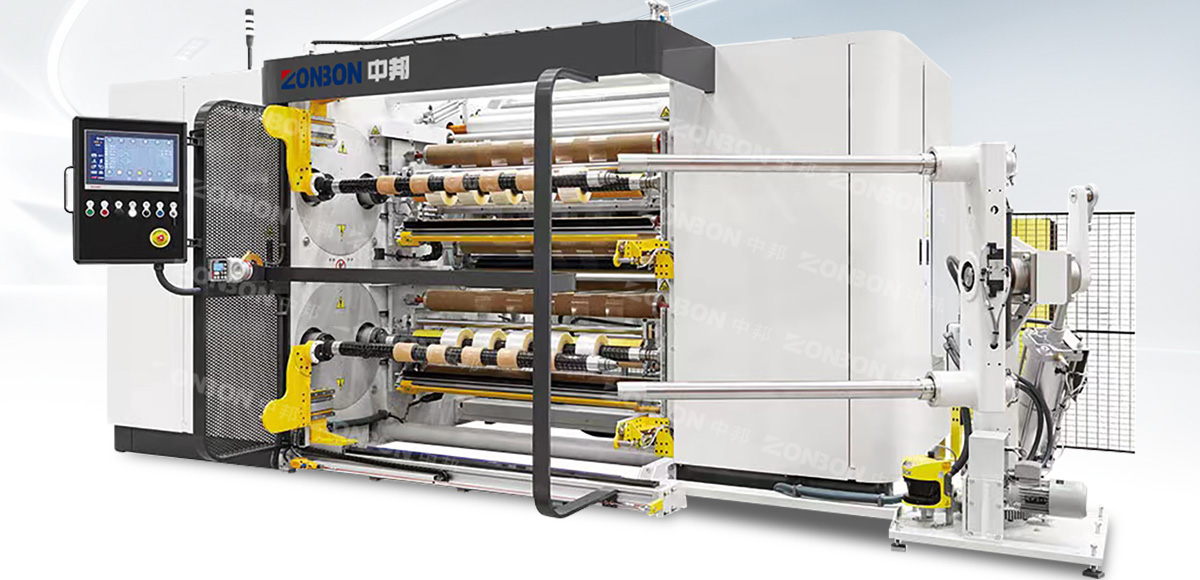
The slitting machine primarily consists of the following core components:
Unwinding System: Secures the raw material roll and ensures smooth material feeding.
Edge Position Control (EPC) System: Automatically adjusts material alignment to prevent deviation.
Slitting Unit: Includes circular knives, straight knives, or air knives for precise material cutting.
Rewinding System: Rolls the slit narrow-format materials into finished product rolls.
Tension Control System: Maintains stable material tension during the slitting process.
Electrical and PLC Control System: Enables automated operation and parameter adjustments.
Working Principle: The raw material is fed through the unwinding system into the slitting zone, adjusted by the EPC system, cut by the slitting tools according to preset widths, and finally rewound into finished rolls by the rewinding system.
Inspect Equipment Condition: Ensure all components (knives, bearings, guides, etc.) are free from wear or looseness.
Select Appropriate Knives: Choose circular knives, straight knives, or ultrasonic knives based on material properties (e.g., thickness, hardness).
Adjust Tension Parameters: Set suitable unwinding and rewinding tension for different materials (e.g., films, paper, foil) to avoid stretching or breakage.
Set Slitting Width: Adjust knife spacing via PLC or manually to ensure cutting precision.
Safety Checks: Verify that emergency stop buttons, protective covers, photoelectric sensors, and other safety devices are functioning properly.
Low-Speed Start: Begin at a low speed to observe material alignment before gradually increasing speed.
Monitor EPC System: Ensure the EPC system operates correctly to prevent material deviation and uneven edges.
Check Slitting Quality: Regularly sample and measure slit widths to ensure smooth, burr-free edges.
Avoid Overloading: Never exceed the machine’s rated slitting speed or material thickness limits.
Gradual Deceleration: Reduce speed before stopping to prevent material breakage or knife damage.
Clean Waste: Remove debris generated during slitting promptly to avoid accumulation affecting operation.
Knife Maintenance: Inspect knives for wear after shutdown; sharpen or replace as needed.
Issue | Possible Cause | Solution |
Burred Edges | Dull or improperly installed knives | Replace or sharpen knives; adjust angles |
Material Deviation | EPC system failure or uneven tension | Check EPC sensors; adjust tension |
Uneven Rewinding | Incorrect rewinding tension | Recalibrate tension; inspect air pressure |
Abnormal Vibration | Worn bearings or loose screws | Tighten screws; replace damaged bearings |
Clean machine surfaces and internal debris.
Inspect air and oil circuits for blockages.
Lubricate moving parts like guides and bearings.
Replace worn knives.
Inspect electrical wiring to prevent aging or short circuits.
Calibrate tension sensors and EPC system.
Disconnect power and release residual pressure.
Apply anti-rust oil to critical parts (e.g., knives, guides).
Operators must be trained and familiar with equipment functions and emergency procedures.
Avoid wearing gloves near rotating parts to prevent entanglement risks.
Never adjust knives or clean debris during operation; always shut down first.
Regularly inspect electrical safety to prevent leaks or short circuits.
Proper usage of a slitting machine requires strict adherence to operational standards and regular maintenance to ensure efficient and stable performance. As a leading manufacturer of slitting equipment, ZONBON recommends users optimize slitting parameters based on material properties and production needs, while establishing robust equipment management processes to maximize productivity and product quality.
For professional technical support, contact the ZONBON after-sales service team for customized solutions.
(Provided by ZONBON Technical Department. Reprinting with attribution is permitted.)
pre: -
next: -
Zonbon, The Most Professional Flexible Printing and Packaging Converting Machines Manufacturer Around You.
© 2011-2025 Zonbon Printing & Packaging Machinery Co., Ltd. All Rights Reserved