Blogs
We share with you the latest industry trends, try to solve all your questions about flexible packaging machines and printing machines as well. Read our blogs to keep abreast of what’s new in the industry and in Zonbon.

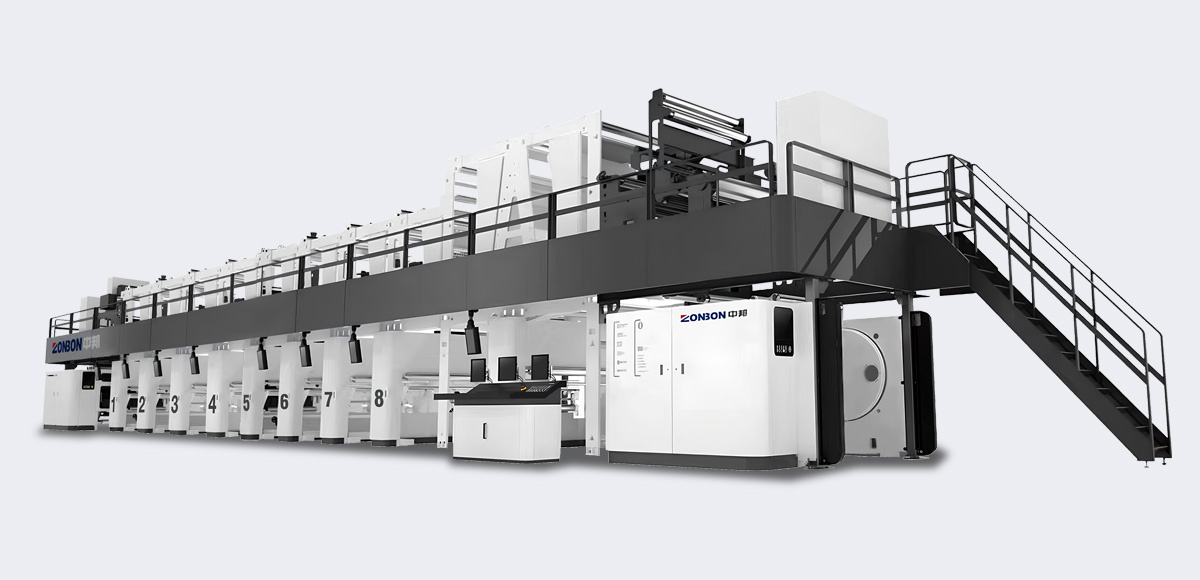
As a core technology in the fields of packaging printing, decorative materials, and specialty printing, gravure printing holds an irreplaceable position in the global printing industry due to its exceptional print quality, high production efficiency, and excellent ink transfer performance. As manufacturers of this high-end equipment, professional gravure printing machine manufacturing plants are not merely machining workshops; they are comprehensive application platforms integrating precision engineering, materials science, and automation control technology. This article will provide an in-depth analysis of the technical architecture, production processes, and quality control systems of modern gravure printing machine manufacturing plants, showcasing the technical depth and industrial appeal of this specialized manufacturing field.
Professional gravure printing machine manufacturing plants are typically scientifically zoned according to functional modules, including:
R&D and Design Center: Equipped with CAD/CAE/CAM systems for complete machine design, simulation analysis, and process optimization.
Precision Machining Zone: Configured with key equipment such as large gantry milling machines, CNC machining centers, and high-precision grinding machines.
Assembly and Debugging Zone: Precision assembly stations and dynamic testing platforms within a constant temperature and humidity environment.
Electrical Control System Integration Zone: Integration and testing of electrical systems including PLCs, servo drives, and human-machine interfaces.
Quality Inspection Center: Precision inspection equipment such as coordinate measuring machines, laser interferometers, and dynamic balancing machines.
Materials and Storage Zone: Scientific management of special steels, precision components, and standard parts.
The manufacturing of gravure printing machines imposes strict requirements on the production environment:
Key assembly areas maintain a constant temperature of 20±2°C and relative humidity of 50±5%.
Cleanliness control to prevent contamination of precision components.
Anti-vibration foundation design to ensure machining accuracy of large machine tools.
Printing cylinder machining process:
Utilizes high-strength alloy steel or special steel.
Multi-step precision machining: rough turning → heat treatment → finish turning → grinding → superfinishing.
Dynamic balancing accuracy reaches G1.0 grade (residual unbalance less than 1 g·mm/kg).
Surface chrome plating or ceramic treatment, achieving hardness of HV800-1000.
Frame and machine bed manufacturing:
Structural design optimized using finite element analysis.
Stress relief treatment for large welded components.
Multi-face machining completed in a single setup on a five-face machining center.
Flatness of key mating surfaces ≤0.02mm/m, perpendicularity ≤0.01mm/m.
Modular pre-assembly system:
Unit module pre-assembly: Independent assembly and debugging of printing units, drying systems, tension control modules, etc.
Datum establishment: Establishing the complete machine coordinate system based on the machine bed guide rails.
Layered assembly: Base frame → transmission system → printing units → auxiliary systems.
Precision transfer chain: Precision control chain from basic components to the complete machine.
Key assembly precision indicators:
Printing unit parallelism: ≤0.01mm.
Cylinder bearing clearance: 0.002-0.005mm.
Transmission gear backlash: 0.03-0.05mm.
Complete machine levelness: ≤0.02mm/m.
Modern gravure printing machine manufacturing plants adopt fully digital R&D processes:
3D modeling and virtual assembly: Identifying interference issues in advance and optimizing structural design.
Finite element analysis: Analyzing strength, stiffness, and vibration modes of key components.
Motion simulation: Simulating the printing process to optimize mechanism motion trajectories.
Computational fluid dynamics analysis: Optimizing ink circulation system and drying air duct design.
Multi-level control architecture:
Drive layer: High-dynamic servo systems with positioning accuracy of ±0.005mm.
Control layer: Multi-PLC coordinated control with response time <2ms.
Operation layer: Industrial-grade touchscreens with visual operation interfaces.
Management layer: MES system integration for production data traceability and analysis.
Intelligent function modules:
Automatic register control system: CCD detection, closed-loop control, register accuracy ±0.05mm.
Adaptive tension control: Multi-zone tension partitioning, taper control algorithm.
Pre-register function: Rapid pre-registration based on image recognition.
Remote diagnostics and maintenance: IoT technology for equipment condition monitoring.
Incoming material inspection:
Analysis of chemical composition and mechanical properties of key materials.
Original manufacturer certification for core components like imported bearings and guide rails.
Review of 3D inspection reports for outsourced machined parts.
In-process inspection:
Establishment of quality checkpoints between processes.
SPC statistical process control for critical dimensions.
Quantified management of torque during assembly processes.
Complete machine testing:
No-load run test: Continuous 72-hour operation without failure.
Load performance test: Printing tests under different speeds and material conditions.
Precision stability test: Monitoring register accuracy and tension stability during continuous production.
Professional gravure printing machine manufacturing plants adhere to strict factory standards:
Mechanical accuracy complies with GB/T 3264-2013 national standard.
Electrical safety meets CE/UL international certification requirements.
Noise control ≤75dB(A) (operating state).
Energy efficiency indicators: Drying system thermal efficiency ≥75%.
Chapter 5: Industry Development Trends and Plant Upgrades
Modern gravure printing machine manufacturing plants are upgrading towards environmental sustainability:
Low solvent residue drying technology: Reducing VOCs emissions.
Energy recovery systems: Reusing waste heat from exhaust gases.
Modular design: Facilitating upgrades and retrofits, extending equipment lifecycle.
Easy-maintenance design: Reducing maintenance time and resource consumption.
Application of Industry 4.0 in gravure printing machine manufacturing:
Digital twin technology: Synchronous optimization of virtual and physical equipment.
Predictive maintenance: Fault early warning based on big data analysis.
Flexible manufacturing systems: Adapting to small-batch, multi-variety production demands.
Supply chain collaboration platform: Real-time data interaction with suppliers.
Gravure printing machine manufacturing plants are not only sites for producing equipment but also drivers of printing technology advancement. Through precision manufacturing processes, stringent quality control, and continuous technological innovation, professional plants provide the printing industry with efficient, stable, and intelligent equipment solutions. With the ongoing development of new materials, new processes, and intelligent technologies, modern gravure printing machine manufacturing plants will continue to lead industry-wide technological upgrades, creating greater value for the global printing industry.
Driven by professional manufacturing enterprises like ZONBON Zhongbang Machinery, gravure printing technology is advancing towards higher precision, higher efficiency, and more environmentally friendly and intelligent directions. This provides exceptional equipment support for clients in packaging printing, decorative materials, specialty printing, and other fields, jointly promoting the continuous progress and prosperity of the printing industry.
Copyright Notice: The content of this article is compiled based on professional technical materials from the gravure printing machine manufacturing industry and is for reference and study purposes only. Specific technical parameters and process details may vary depending on the manufacturer and product model. © ZONBON Zhongbang Machinery Technical Documentation Series.
pre: -
next: -
Zonbon, The Most Professional Flexible Printing and Packaging Converting Machines Manufacturer Around You.
© 2011-2025 Zonbon Printing & Packaging Machinery Co., Ltd. All Rights Reserved